 de/at


 Produktleitfaden
Office pods for field service contractor offices: complete guide
Field service contractor office pods are enclosed acoustic workspaces that separate private customer calls and job reviews from shared dispatch activity. This guide shows how to choose office pods for field service contractors without pulling coordination away from the people running jobs.
- Soundbox Store office pods suit field service contractors who need enclosed space for private calls and small job reviews.
- Choose office pods for field service contractors by task: solo customer calls or paired dispatcher and technician reviews.
- Keep routine dispatch coordination at shared desks; reserve booths for conversations that need separation.
- Measure overlapping demand before deciding how many pods to buy.
Why office pods matter for field service contractors
Separate the conversation, not the dispatch function. A customer complaint needs a different setting from a routine update about a technician's arrival. Your office plan should distinguish those tasks rather than put every call behind a closed door.
Start with the work that needs privacy: a disputed invoice, a technician's job notes, a revised quotation. The guide to calculating how many pods your office needs turns overlapping demand into a capacity decision.
A dispatcher handling routine updates needs to stay connected to the shared schedule. Someone handling a customer dispute needs a separate space. Neither requirement cancels the other.
An acoustic pod solves the workspace part of that split. It does not assign escalations, keep job records current or replace a handover process. Define those responsibilities before choosing a booth.
How to plan pods around dispatch, quotations and job reviews
Identify the conversations that need separation
Use a shared spreadsheet to record the tasks that currently send people looking for another room. Classify the task, not the employee. A service coordinator needs an open desk for some work and an enclosed space for other work.
Separate acoustic needs from visual needs. Reducing distraction on a customer call is different from stopping colleagues seeing a quotation on screen.
- Record customer complaints that need a longer conversation.
- List quotation discussions with commercially sensitive details.
- Identify technician debriefs involving job notes or photographs.
- Separate individual calls from face-to-face reviews.
- Keep routine scheduling updates in the shared coordination area.
Measure overlapping demand rather than headcount
Start with a manual call-space log. Record when an enclosed space is needed, how many people use it and whether another suitable room was already taken. Total headcount is not a substitute.
Distinguish a queue from a preference. Someone choosing a booth for quiet admin creates different demand from someone who cannot take a private customer call because every enclosed space is occupied.
- Log the start and end of each private session.
- Record participants physically present, excluding remote callers.
- Mark sessions delayed because no suitable room was free.
- Separate customer calls from scheduled internal meetings.
- Note whether an existing room could handle the same task.
Match the enclosure to the job
Rehearse the task in an existing room before you buy. Ask an employee to run a customer call or paired job review with the equipment and documents they normally use.
When a dedicated enclosure is the next step, Soundbox Store offers single-person and meeting-booth options. The Quell Office Pod Solo is a 1-person booth for private calls, the right starting point when one employee speaks to someone remotely.
The Office Phone Booth Quell - 2 Person is a freestanding enclosure for private meetings of two people. Consider it when a dispatcher and technician review the same job together. Choose by the people inside the booth, not everyone on the call.
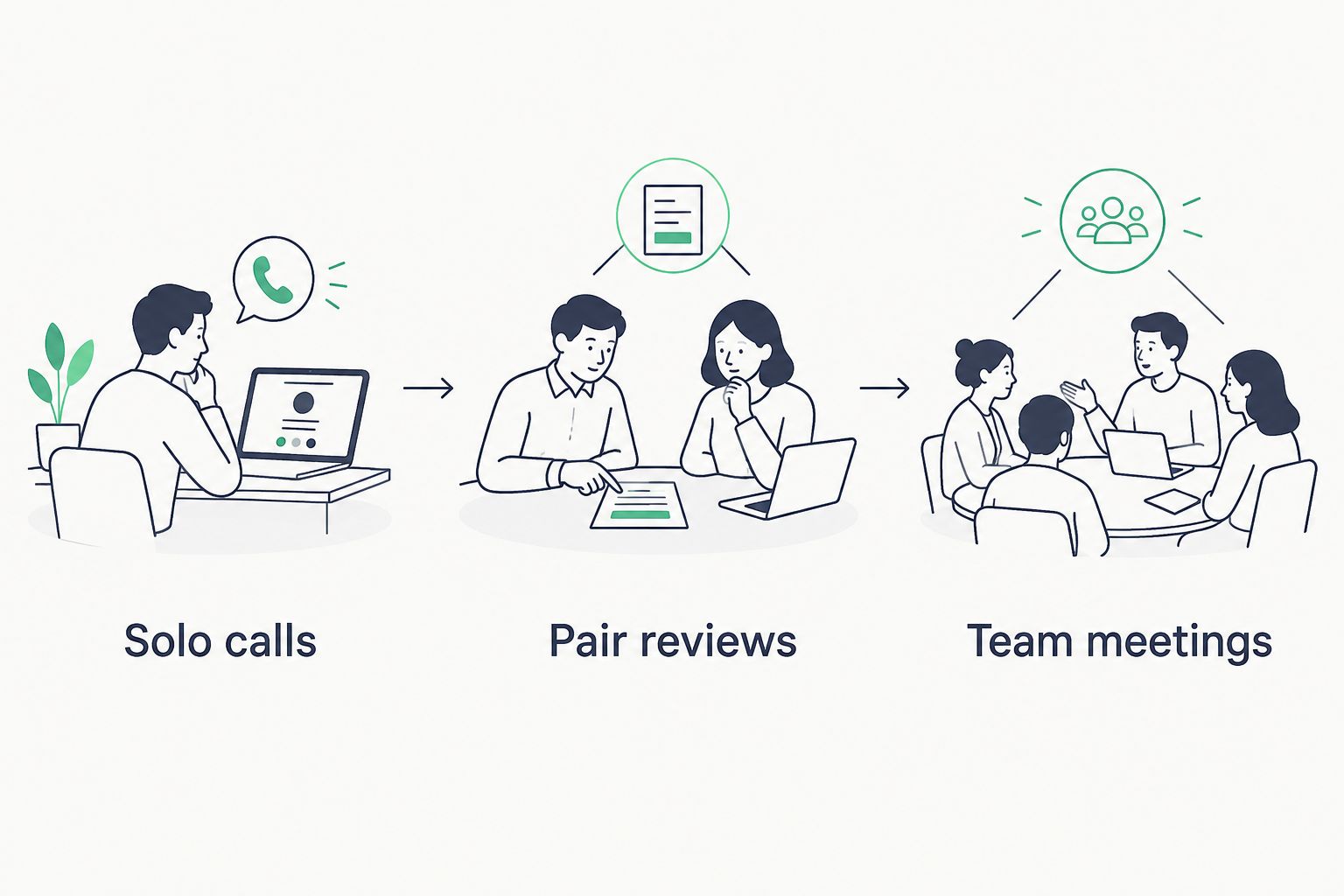
- Use solo calls for individual customer conversations.
- Use pair reviews for dispatcher and technician discussions.
- Keep larger team meetings out of routine call-space demand.
- Match the product's stated capacity to the intended task.
- Confirm which furniture the chosen configuration includes.
Check acoustic performance against the intended conversation
Rehearse a representative call in an existing enclosed room at normal speaking volume. Note what is distracting inside the room and what colleagues can hear outside it.
Soundbox Store products are tested to ISO 23351-1:2020 with 30–35 dB noise reduction. That is a range-level statement, so confirm the figure attached to the exact model you are considering.
Noise reduction does not mean silence. Assess the conversation you actually need to protect rather than treating the word soundproof as a complete answer.
- Ask for the selected model's stated acoustic performance.
- Describe the office noise the enclosure must address.
- Rehearse a normal customer call, not an unusually quiet one.
- Assess distraction inside and audibility outside separately.
- Avoid applying a range-wide figure to an individual model.
Plan how staff stay connected to dispatch
Decide how an employee in a private space receives an urgent scheduling update and how colleagues know when to interrupt. A pod should not create doubt about who owns the next customer response.
Use the tools your team already has before adding a booking system. A shared calendar and an agreed message channel can carry the workflow.
- Define an urgent interruption channel for dispatch updates.
- Keep the shared job schedule reachable during the task.
- Prepare the job reference and notes before entering.
- Test the headset or call equipment you intend to use.
- Record the outcome before returning to the next task.
Set booking rules that protect the main use
Trial the rules with an existing room first. Give each booking a purpose, an owner and an expected finish. Keep customer names and sensitive job details out of calendars the whole office can see.
If a booth meant for escalations is permanently booked for admin, the purchase has not solved the original problem.
- Name bookings by task rather than customer.
- Assign someone to release unused reservations.
- Protect access for the primary customer-facing use.
- Set a rule for solo use of a paired booth.
- Review recurring bookings when job patterns change.
Review results before adding capacity
Compare the call-space log before and after the new space arrives, using the same task categories. Heavy use alone does not prove you need another pod.
Look for unresolved demand: delayed private calls, displaced paired reviews, staff drifting back to shared desks. Then find the cause. It may be a booking rule, the wrong capacity or genuine overlap.
- Compare delayed private sessions against the original log.
- Record whether paired reviews get the space they need.
- Check whether routine admin is blocking call access.
- Ask staff which tasks still lack a suitable setting.
- Change booking rules before assuming you need another pod.
Compare workspace options for contractor offices
The best option separates the required task without disrupting dispatch. Keep shared desks, existing rooms and dedicated booths in the same decision.
| Option | Best for | Main advantage | Key limitation |
|---|---|---|---|
| Shared dispatch desk | Routine scheduling and quick updates | Keeps coordination visible | No separation from nearby colleagues |
| Existing meeting room | Scheduled job reviews | Uses a room you already have | Competes with other meetings |
| Quell Office Pod Solo | Individual customer calls | Dedicated 1-person format | No paired-review format |
| Office Phone Booth Quell - 2 Person | Dispatcher and technician reviews | Dedicated 2-person format | Needs booking rules if solo callers share it |


Common mistakes field service contractors make
Moving all dispatch calls into enclosed spaces
Routine scheduling and private customer conversations are different tasks. Forcing dispatchers away from their desks for every call removes the distinction your plan should keep.
Choosing capacity from the largest occasional meeting
An occasional team discussion does not define everyday call-space demand. Buy for the recurring task and keep larger meetings in an existing room.
Treating acoustic separation as a privacy policy
An enclosure does not control what appears on a laptop, how job documents are handled or what a shared calendar shows. Keep those decisions in the workflow.
Letting quotation prep consume customer-call space
Focused quotation work is legitimate, but it should not displace the private calls that justified the booth. Use your demand log to set priority.
Leaving the handover outside the process
A private conversation needs a recorded outcome. Require the employee to update the job record and name the next action and its owner.
FAQ
What are the best office pods for field service contractors?
Match the pod to the recurring task: a solo booth for individual calls or a two-person booth for dispatcher and technician reviews. Decide from recorded demand, not total headcount.
Is a solo pod better than a two-person booth for dispatch calls?
A solo pod fits when one employee is present. A two-person booth also serves face-to-face job reviews but needs booking rules to protect paired access.
Should dispatchers work inside a pod all day?
No. Use a pod for tasks that need separation and keep routine scheduling connected to the shared coordination area.
How many pods does a contractor office need?
Base the number on overlapping demand for enclosed conversations. Log sessions, participants and delays, and count existing rooms that can do the same work.
Do acoustic pods guarantee customer conversations cannot be heard?
No. Noise reduction is not silence. Check the acoustic information for the exact model and test the intended task in your office.
How should a contractor office book a shared booth?
Give each reservation a task, an owner and an expected finish. Release unused bookings and keep sensitive customer details out of shared calendars.
One last thing
Name the task before you name the room. Calling a booth the customer escalation booth gives staff a clearer rule than calling it the quiet pod. If you cannot describe the recurring work a booth will serve, keep measuring before you buy.


