 de/pt
de/pt




















 Produktleitfaden
Is a soundproof pod worth it? Yes for calls | 2026
Yes, a soundproof pod is worth it in 2026 if your workplace regularly needs private calls, focused work or small meetings and existing rooms do not cover those needs. It is a poor fit for occasional use or for noise that affects the whole office. Choose a pod for a recurring room-sized problem, not as a fix for every sound on the floor.
- Is a soundproof pod worth it? Yes for recurring private calls or small meetings; skip it for occasional use.
- Soundbox Store's office pods range from solo booths to meeting booths; choose by the activity that needs privacy.
- Soundbox Store describes 30–35 dB noise reduction across its pod range, not complete silence.
Is a soundproof pod worth it in 2026?
Yes, when the need is frequent and specific. A pod gives someone a separate space for a call or a small group a place to talk. If the problem is general noise across an open-plan floor, a pod addresses only the activity taking place inside it.
| Option | Best for | Advantage | Limitation |
|---|---|---|---|
| Quell Office Pod Solo | One person's private calls | A dedicated solo phone booth | Not a space for a two-person discussion |
| Office Pod Quell Flex | One person's focused work in an office that reconfigures | Designed for a changing office layout | Does not provide a shared meeting space |
| Quell+ - 2 Person Pod | Private conversations between two people | Both participants can use the same pod | More space than a solo caller needs |
The choice starts with who needs to be inside, not the word soundproof. Soundbox Store describes its acoustic office pod range as providing 30–35 dB noise reduction. That range is useful context, but the supplied information does not assign an individual rating to every model in the table. Check the specification for the exact pod you are considering rather than treating a range-wide figure as a promise for one product.
Why this matters
A call booth and a meeting booth solve different problems. If one person needs somewhere to take a video call, a larger booth does not make that call more useful. If two colleagues need to speak together, a solo pod cannot serve the task, however often the office runs short of quiet space.
The practical question in 2026 is whether the interruption happens often enough to justify a dedicated space. Look at the calls or conversations people struggle to place during an ordinary working week. If you cannot identify a recurring use, keep using existing rooms instead of selecting a pod because it sounds like a general upgrade.
Match the pod to the work
- Calls: Choose a solo phone booth when one person needs separation from nearby conversations during calls. The benefit belongs to the caller and the people working around them; it does not create another meeting room.
- Focused work: Consider a solo work pod when someone needs a separate place to concentrate. Decide whether that person needs a work setting rather than a booth intended chiefly for calls.
- Meetings: Choose a meeting booth when colleagues need to talk together without taking over an open desk area. Match its stated person capacity to the group that will actually use it.
These uses can overlap, but they should not be treated as interchangeable. A booth selected for quick calls can be the wrong answer if the recurring problem is a two-person conversation. Likewise, a meeting booth can sit underused when the unmet need is one caller at a time.
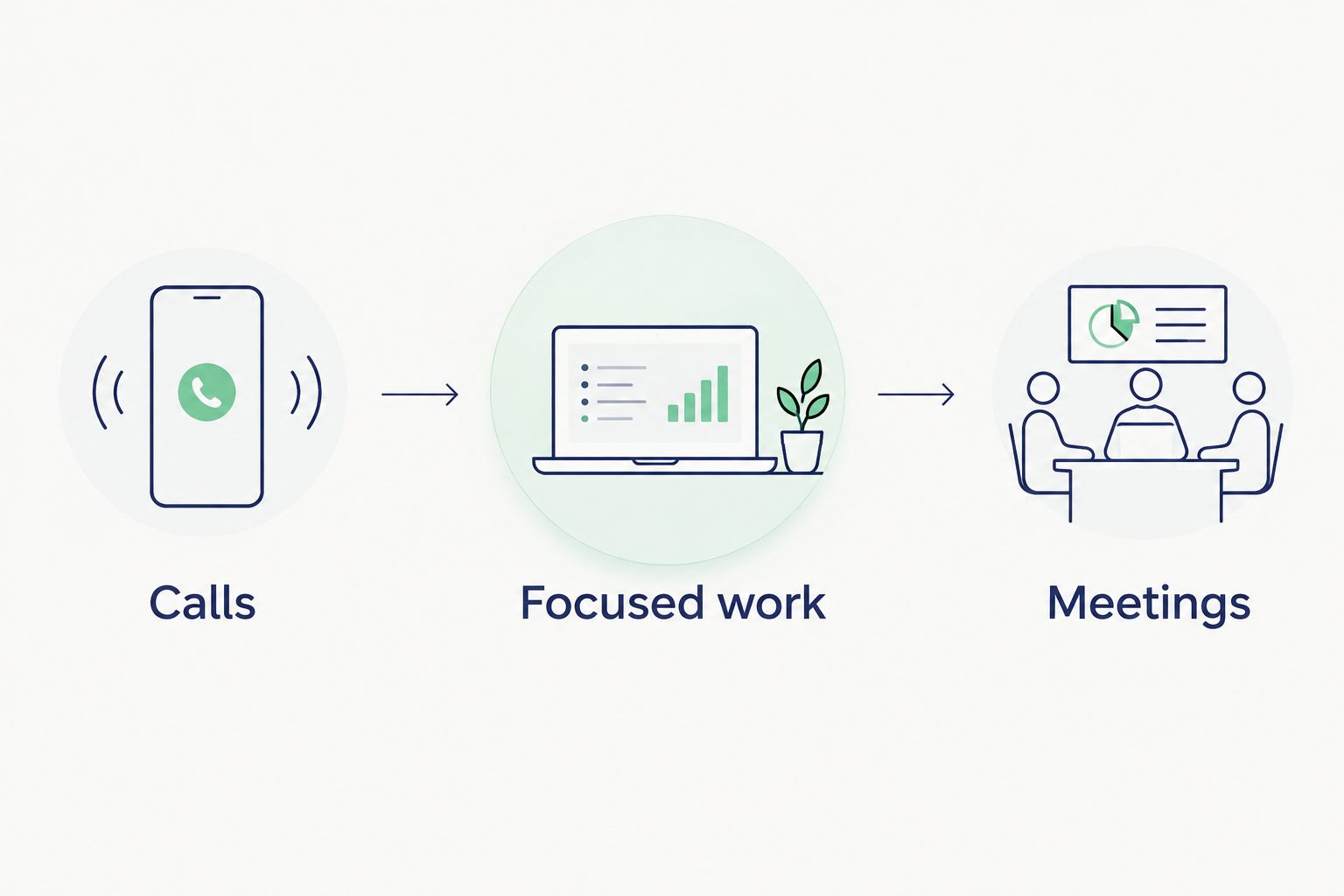
Before comparing models in 2026, ask the people who would use the space which activity currently has no suitable room. That gives you a better brief than a general request for a quieter office. It also exposes a mismatch early: a pod for individual calls will not resolve a shortage of places for group discussions.
Solo calls: one-person pods
A one-person booth makes sense when the recurring need is an individual call away from a shared desk area. Quell Office Pod Solo is described in the supplied product information as a one-person soundproof phone booth designed for private calls. Soundbox Store's Quell Office Pod Solo is best for workplaces that need a dedicated space for one caller.
Its advantage is the clear fit between capacity and use. Its limit is just as important: it cannot host the two people who need to speak together in person. Do not use a solo phone booth as the answer to a meeting-room shortage.
Office Pod Quell Flex is also described as a one-person soundproof office pod, built for offices that reconfigure. That makes it the more relevant model to examine when the brief centres on a changing workspace and individual use. The supplied description does not establish that it has the same layout, fittings or acoustic rating as Quell Office Pod Solo, so compare their current product specifications before choosing between them.
Small meetings: two-person pods
A two-person pod is worth considering when the unresolved task is a conversation between colleagues, not an individual call. Quell+ - 2 Person Pod gives that task a stated two-person option. It is best for a workplace whose recurring privacy need involves both people being present.
The advantage is that the space matches the conversation. The trade-off is that reserving it for a single caller uses a two-person space to solve a one-person problem. If the calendar is dominated by individual calls, start with the solo use case instead.
Larger meetings need a different brief. Soundbox Store sells meeting booths in more than one size, but a model's name or URL alone does not tell you how its interior will suit your meeting. Check the current product information for the specific booth and discuss who needs to be in the room at the same time.
Why the answer varies
The decision changes with the work, not with a universal rule about pods. Use these factors to make the 2026 decision for your workplace:
- Frequency of use: A recurring need for a separate call or discussion space makes a dedicated pod easier to justify than an occasional exception. Record the actual use before choosing a model.
- Number of participants: A one-person booth suits a solo caller; a two-person pod suits a conversation between two people. Choose for the group that needs the space, not a larger hypothetical group.
- Existing rooms: If suitable rooms are already available when people need them, a pod duplicates a working option. If calls routinely compete with meetings for the same room, the gap is more specific.
- Type of noise: A pod separates the activity inside it. It does not treat noise across the rest of an open-plan office, so identify where the disruption starts.
- Acoustic expectation: Soundbox Store's stated 30–35 dB range describes noise reduction across its range. It is not a claim of silence, nor a substitute for checking the selected model's specification.
- Intended activity: Private calls, solo concentration and two-person discussions place different demands on a space. Decide which task has priority before comparing booths.
A useful purchasing brief states the activity, the usual number of participants and what existing rooms fail to provide. It should also say what you expect the pod to change for people outside it. Without those answers, even a correctly sized booth can address the wrong problem.
How do you decide whether to buy one?
Use a short, observable decision process rather than an assumed financial return. In 2026, begin with the conversations that are difficult to place, then check whether one type of pod covers enough of them to earn its space.
- Name the unmet activity. Write down whether people need space for solo calls, focused work or meetings. Keep those categories separate; their capacity needs differ.
- Check the rooms you already have. Identify whether the problem is a lack of rooms or a clash between different uses of the same room. A pod is not the answer if an existing room is consistently available.
- Match the stated capacity. Choose a one-person option for a solo task and a shared option for a shared task. Do not buy extra capacity solely because it sounds more flexible.
- Read the selected model's specification. Confirm that its stated purpose and acoustic information match the use you identified. Do not transfer a specification from another model.
- Decide what success means. A sensible outcome is that the intended activity has a suitable place when needed. If you cannot describe that outcome, pause the purchase decision.
This process also keeps the financial question honest. No purchase figure, usage record or room-booking data is supplied here, so there is no basis for a payback claim. Compare the current product details with your own room demand before assigning a value to the extra space.
Can a soundproof pod replace a meeting room?
A soundproof pod can replace a meeting room for a meeting that fits the pod's stated capacity and intended use. It cannot replace every meeting room simply because it offers a quieter enclosed space. Start with the number of people who must talk together, then check the specific booth's product information.
For a private exchange between two colleagues, Quell+ - 2 Person Pod is a more direct match than Quell Office Pod Solo. For a larger group, assess a meeting booth intended for that group rather than asking two people to share a solo space or assuming any booth can serve every meeting format.
Will a pod make the whole office quiet?
No. A pod addresses the activity inside it, not every source of noise outside it. Soundbox Store describes noise reduction across its pod range, but that does not mean the surrounding office becomes silent. If the main complaint concerns noise throughout the floor, define that broader problem separately.
This distinction matters when setting expectations with colleagues. A booth for calls gives callers another place to speak; it does not eliminate conversations at desks. A meeting booth gives a group a separate discussion space; it does not change every other activity around it.
FAQ
Is a soundproof pod worth it for occasional calls?
No, occasional calls alone are a weak reason to dedicate space to a pod when a suitable room is available. Identify a recurring unmet need before selecting a model.
What is a solo office pod best for?
A solo office pod is best for one person's private calls or individual work, depending on the model's stated purpose. It is not a substitute for a shared meeting space.
Is a two-person pod better than a phone booth?
A two-person pod is better when two people need to talk together; a solo phone booth is better matched to one caller. Choose by the usual activity rather than assuming the larger option is always better.
Does soundproof mean no sound gets through?
No, do not treat soundproof as a promise of silence. Soundbox Store describes 30–35 dB noise reduction across its pod range; check the selected model's own acoustic information.
Should I choose a pod before checking existing meeting rooms?
No, first check whether existing rooms are available for the calls or conversations people need to hold. A pod is easier to justify when it fills a specific gap rather than duplicating an available room.
How do I choose between a call booth and a meeting booth?
Choose a call booth for a recurring one-person task and a meeting booth when people need to talk together. Check the individual product's stated capacity and purpose before deciding.
One last thing
The strongest case for a pod in 2026 is not that it makes an office soundproof. It is that a particular call, work session or meeting finally has a suitable place. If you can name that recurring task and the people who need the space, you have a clear basis for comparing Soundbox Store's office pods. If you cannot, wait until the need is clearer.


