 es/pt
es/pt




















 Guía de productos
Can you return an office pod if it doesn't fit? Ask | 2026
An office pod that does not fit is not automatically returnable. Whether you can return it depends on the seller’s written terms for your order and the stage at which you report the problem. Before ordering in 2026, confirm the pod’s dimensions against both its intended position and the route to that position, then get the return conditions in writing.
- Can you return an office pod if it doesn't fit? Do not assume so; check the written terms for your order.
- Soundbox Store is best for businesses comparing pod capacities before ordering, not for relying on an unconfirmed return.
- Check the intended position and the route to it; a pod can suit one and not the other.
- If a pod has already arrived, document the mismatch and ask the seller what options apply to your order.
Why this matters
A fit problem has two distinct forms: the pod does not suit the space where you want to use it, or its components cannot travel along the planned route to that space. The second problem is easy to miss when you focus only on the finished pod’s footprint. Neither problem, by itself, establishes a right to return a particular order.
Soundbox Store sells pods for different group sizes, including the Quell Office Pod Solo for one person and an office phone booth for two people. Those descriptions help you shortlist by use. They do not replace the model-specific dimensions, order terms or a check of your own space.
Can you return an office pod if it doesn't fit?
Check the terms attached to your order before treating a return as an option. The supplied Soundbox Store information does not specify a returns window, a fit-related return condition or a process for a pod that cannot reach its intended room. Ask for written confirmation that addresses your exact product and circumstances; do not infer an answer from a product name or a general description.
| When you discover the problem | What to check | Next move |
|---|---|---|
| Before ordering | The intended position, the route to it and the written order terms | Resolve the mismatch before placing the order. |
| After ordering, before arrival | The confirmed product details and the terms for changing the order | Contact the seller promptly and ask what options apply. |
| After arrival | Which measurement or route point caused the mismatch | Record the details and request a written response about your order. |
The point at which you discover the mismatch changes what you need to ask, but it does not prove that a return will be accepted. In 2026, the useful answer is the written answer for the specific order, not an assumption based on another buyer’s experience.
What should you do first if a pod has already arrived?
- Identify the exact mismatch. Is the issue the intended floor position, a doorway, a corridor turn or another part of the route? State where the difficulty occurs rather than describing the pod only as too big.
- Keep the order details together. Locate the product name, the specifications supplied for that order and the written terms you received. Compare what you ordered with the space you measured.
- Record the measurements and photographs. Show the relevant space and the point where your plan no longer works. Do not claim a product dimension from memory; use the information supplied for the exact model.
- Ask the seller for an order-specific response. Explain the mismatch, provide the order details and ask whether any change or return option applies. Wait for confirmation before planning around that option.
This sequence gives the seller a precise question to answer. It also separates a mistaken space estimate from a possible difference between the product information supplied and the product ordered, without assuming how either situation will be handled.
Check the space before you commit
Start with the job the pod needs to do. A one-person phone booth serves a different conversation from a two-person meeting booth; a larger meeting pod answers a different space requirement again. Choose the required capacity first, then test the exact model against the available space. Do not select a larger pod because the room looks open in a photograph.
Make two distinct checks on a floor plan: where the pod is intended to stand and how its components would reach that position. Note fixed features that affect your plan, such as door openings, corridor turns and existing furniture. For product-specific measurements or delivery details, use information confirmed for the model and order rather than applying figures from another pod.
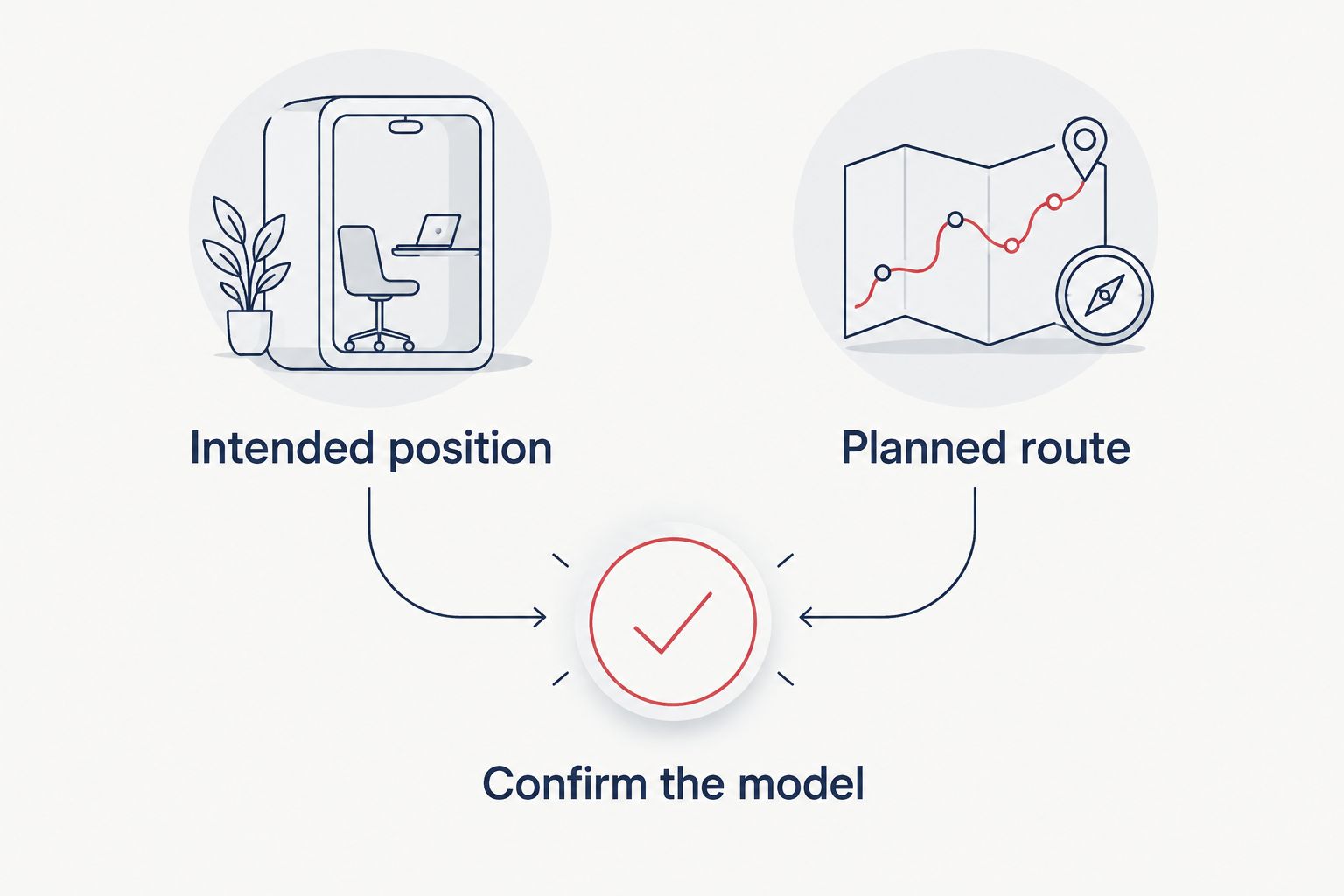
Soundbox Store offers one-person and meeting-booth options, but capacity alone cannot tell you whether either fits your premises. The decision needs the exact product information and measurements of the actual space. If either set of measurements is unresolved, pause the order rather than treating a possible return as a backup plan.
Ask for written answers to these questions
- What are the dimensions relevant to the exact pod you are ordering?
- What information is available about the components that must pass through the planned route?
- Which written terms apply if your measured space proves unsuitable?
- At what stage must you raise a proposed change to the order?
- Who should receive the measurements and photographs if you identify a problem?
These are questions, not statements of Soundbox Store policy. A product listing can establish what a pod is designed to do; only the applicable order information can establish what happens if your chosen space does not work.
Why an office pod fit decision varies
- Intended use. A private call for one person and a meeting for two people call for different pod capacities.
- Exact model. Do not substitute measurements from another pod, even when the names or intended uses sound similar.
- Position in the room. The clear area you measured needs to match the place where you actually want the pod.
- Route to that position. Door openings and corridor turns are separate questions from the finished pod’s footprint.
- Existing room features. Furniture and fixed features affect the usable area on your plan.
- Order terms. The answer to a return request depends on the written conditions applicable to the specific order, not just the reason the pod does not fit.
A simple capacity shortlist can narrow the choice, but it cannot settle these factors. For a 2026 purchase, keep the use case, model details, room measurements and written order terms together so the decision rests on the same set of information.
Can you return a pod because you chose the wrong size?
Choosing the wrong size does not establish whether a return is available. Check the terms for your order and tell the seller which model you ordered, what space you intended to use and where the mismatch occurs. Soundbox Store’s product range includes different capacities, but the existence of another option is not evidence that an order can be exchanged.
If you have not ordered yet, reverse the sequence: choose the capacity you need, confirm the exact model details and measure the space before committing. That avoids making a return decision carry the weight of a sizing decision.
What if the pod fits the room but not the route?
A room that has enough space for the intended pod does not answer whether the planned route works. Identify the point on the route that causes concern and ask for the relevant product information before ordering. If the issue emerges after an order is placed, give the seller the same specific measurements and ask what options apply.
Do not treat a finished-product footprint as a substitute for route information. The distinction matters just as much for a one-person booth as it does for a larger meeting pod; neither capacity label describes your corridors or door openings.
Should you order a smaller pod to avoid a return?
Order a smaller pod only if it still serves the work you need it to support. Soundbox Store is best for businesses comparing a one-person call space with meeting-booth capacity before purchase; it cannot tell you which use to sacrifice when space is tight. A pod that fits physically but does not accommodate the intended conversation is still the wrong choice.
In 2026, the sound decision is not simply to pick the smallest option. Define who needs to use the space, check the exact model information and confirm the planned position and route. If those checks do not resolve the choice, seek clarification before ordering.
FAQ
Can you return an office pod if it doesn't fit?
A fit problem does not automatically make an office pod returnable. Check the written terms for your specific order and ask the seller for an order-specific answer.
What should I measure before ordering an office pod?
Measure the intended position and check the full planned route to it. Compare your measurements with the information supplied for the exact model rather than another pod.
Does a pod fitting on a floor plan mean it will fit in my office?
No. A floor plan of the intended position does not settle whether the planned route works. Check both separately before ordering.
Can I change to a smaller pod after ordering?
Do not assume a change is available. Ask the seller what options apply to your specific order and get the answer in writing.
What should I send if my pod does not fit?
Send the order details, the exact point of mismatch, relevant measurements and photographs. Ask the seller to respond under the terms applicable to your order.
Is a one-person booth always the best choice for a small office?
No. A one-person booth is suited to an individual use case, while a two-person meeting needs different capacity. Choose by intended use, then check whether the exact model suits the space.
One last thing
A return question is easiest to avoid while the order is still a question. In 2026, ask for the exact model information and the applicable terms before committing. Soundbox Store sells both individual booths and meeting pods, but no capacity label can confirm the measurements of your premises or promise a fit-related return.


