 fi/gb


 Tuoteopas
How to take work calls privately in a shared home
To take work calls privately in a shared home, use a separate room with the door closed, listen through headphones and agree uninterrupted call times with the people you live with. Check whether your normal speaking voice is intelligible outside before discussing sensitive information. Headphones keep the other participants off loudspeaker; they do not stop housemates hearing your voice.
- Private work calls in a shared home need speech privacy, not just a quiet microphone.
- Headphones contain incoming audio; a closed room separates your spoken conversation from shared space.
- Soundbox Store offers single-person acoustic phone booths for callers seeking a dedicated enclosed workspace.
- Check what housemates can understand outside the room before discussing sensitive information.
How do you take work calls privately in a shared home?
Start with separation, then check the result. Follow this sequence before your next call:
- Choose a separate room. Avoid communal spaces where other people need to sit or pass through.
- Use headphones. Keep incoming speech off the room’s speakers.
- Agree a call boundary. Tell housemates when the room needs to remain undisturbed.
- Check speech outside. Use ordinary, non-sensitive sentences at your normal speaking volume.
- Consider a dedicated enclosure if the room fails. The Quell Office Pod Solo is a 1-person booth designed for private calls; confirm its suitability for your particular home before choosing it.
A call is not private simply because the person on the other end hears clean audio. Your microphone and the people outside your room are hearing different things.
Why this matters
Shared homes create competing needs. Your bedroom might also be someone else’s route to stored belongings, while a kitchen table remains communal even when you have a meeting booked.
Separate three problems: what your housemates hear, what remote participants hear and what either group can see. A headset addresses incoming audio, microphone settings address transmitted sound, and a separate room addresses physical separation. None replaces the others.
For sensitive conversations, follow your employer’s instructions about suitable working locations. If your home cannot provide the required privacy, arrange another location rather than relying on an audio setting.
Choose the space around the call, not the camera background
A tidy background does not establish speech privacy. Choose your room by considering who needs to enter, where people sit nearby and whether you can hold the room for the full conversation.
A bedroom with an agreed period of exclusive use is a more practical starting point than a shared living room where someone is already working. That is a household arrangement, not a claim about either room’s sound insulation.
Before settling in, ask:
- Will someone need access during the call?
- Is another person working immediately outside?
- Will the call overlap with household activity?
- Can you keep work documents and your screen out of other people’s view?
- Where will you move if the room becomes unavailable?
Choose a space you can actually reserve. A room that repeatedly needs to be handed back is not a dependable location for an uninterrupted client discussion.
Keep your fallback specific. Agree which other room you can use, or arrange an alternative workspace with your employer before the conversation begins.
Headphones: best for keeping incoming speech out of the room
Headphones let you hear the other participants without broadcasting their words through your laptop speakers. That makes them a useful starting point for shared-home calls, including conversations where the other person discusses information you should not share with housemates.
The limitation is straightforward: you still speak into the room. Neither headphones nor noise cancellation around your ears creates an acoustic barrier around your voice.
Select your headphones as the meeting’s audio output before joining. Check the selected microphone separately, because choosing a listening device does not always mean you have selected the microphone you intended to use.
Keep your speaking voice conversational. If you find yourself raising it to compete with household noise, pause and change the conditions rather than trying to talk over everything.
Keep microphone controls separate from privacy decisions
Background-noise suppression changes the sound sent to the meeting. It does not stop someone standing outside your door from hearing you directly.
Mute when you are not contributing, particularly while another person is speaking. When you unmute, assume your voice is audible in the surrounding space until you have checked otherwise.
A closed room: best for calls when you can reserve existing space
An existing room gives you a physical boundary and a clear way to signal that a call is in progress. Its practical advantage is that you can begin with the space you already have, without choosing another product.
Its limitation is variable speech privacy. A closed door is a starting point, not proof that words cannot be understood elsewhere in the home.
Do not confuse a quieter-sounding room with one that contains speech. Soft furnishings can reduce reflections inside a room, but that is different from preventing sound travelling into adjacent spaces.
Keep documents away from shared surfaces after the call. Physical separation during a meeting does not protect notes left on the dining table afterwards.
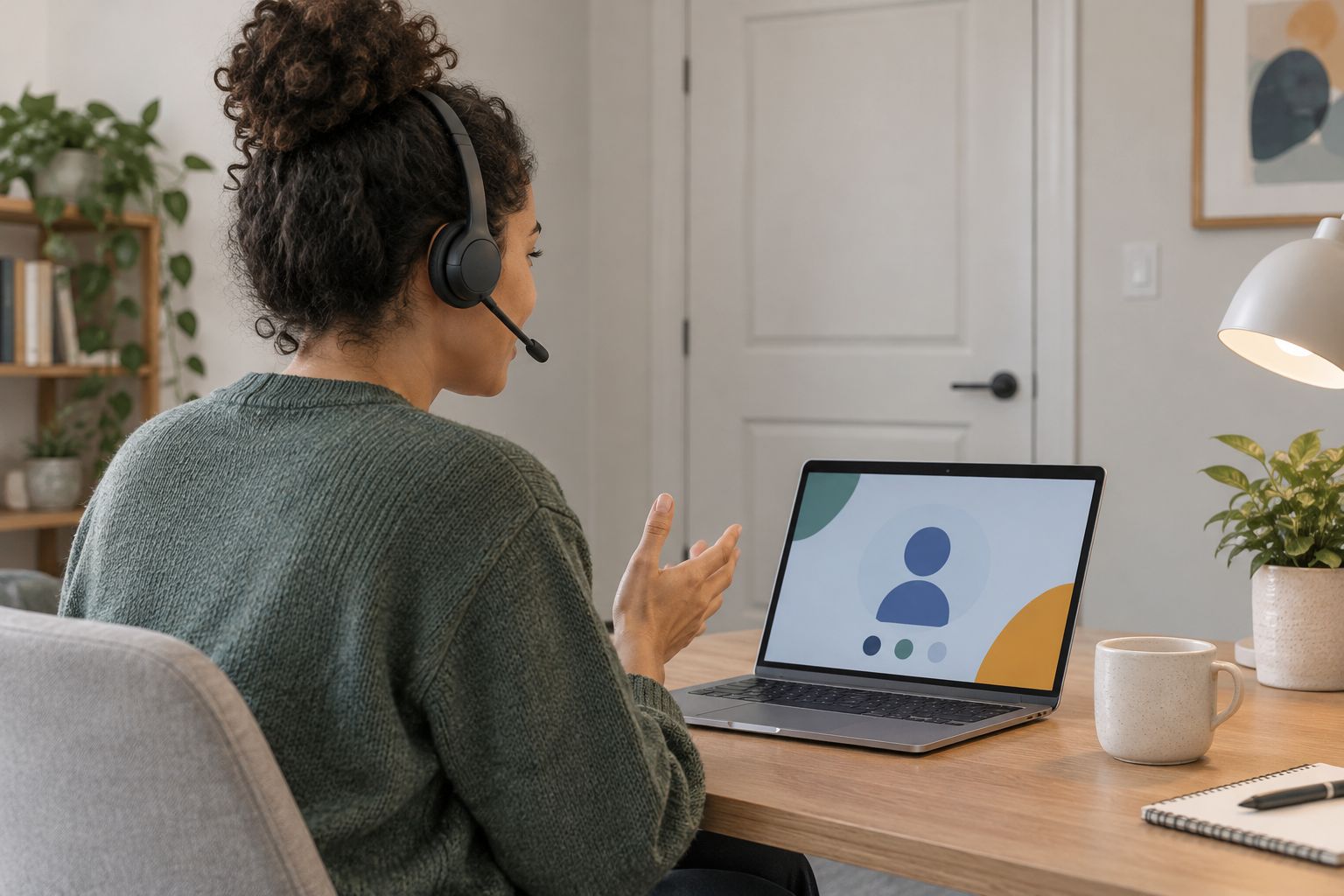
Check whether people outside can understand your words
Ask a housemate to help before using a room for a sensitive call. Use harmless sentences rather than actual client details, personnel information or anything confidential.
Speak as you normally would during a meeting, from the position where you intend to sit. Ask the listener to stand where they would ordinarily work or spend time, rather than pressing an ear against the door.
Ask what they understood, not merely whether they heard a sound. Hearing indistinct speech and following the substance of a conversation are different outcomes.
Use these questions to make the check useful:
- Were individual words understandable?
- Could the listener follow the topic?
- Did louder phrases become clear?
- Was speech easier to understand from another nearby position?
This is a practical household check, not a formal acoustic assessment or a guarantee of confidentiality. Repeat it if you change rooms or move your speaking position.
If someone can follow the conversation, change the location before sharing sensitive details. Whispering through an important meeting is not a dependable substitute for a suitable space.
Why speech privacy varies between shared homes
The same call routine does not produce the same result in every home. These factors explain why you need to assess your actual room rather than copy someone else’s setup:
- Room separation: An open doorway leaves a direct connection between your call and the surrounding space.
- Nearby listeners: Someone working immediately outside your room is in a different position from someone elsewhere in the home.
- Speaking volume: A raised voice changes what the people around you hear.
- Household routines: A room is harder to reserve when others need regular access.
- Call content: Routine scheduling and a sensitive personnel discussion demand different location decisions.
- Visual exposure: Screens, papers and camera views create privacy issues that audio equipment does not address.
Do not use background household noise as your privacy plan. Activity changes, and a room that seemed masked by conversation can become quiet while you are still speaking.
Agree call boundaries without asking everyone to stop living
Tell housemates when a call begins and when you expect to release the room. Agree how they should contact you if something needs your attention, rather than assuming a closed door explains everything.
Keep the arrangement reciprocal. If another household member also works from home, compare diaries before either person commits the shared room to a meeting.
A useful agreement covers the room, interruptions and overrunning calls. You do not need to share the meeting’s subject or disclose confidential details to explain that you need privacy.
Avoid making a communal space unavailable by default. Reserve it for a defined conversation, then return it to shared use and remove your work materials.
If meetings regularly collide, raise the scheduling problem with your manager. Moving a call or arranging another workspace addresses the conflict more directly than repeatedly asking housemates to abandon their plans.
When a single-person acoustic booth deserves consideration
Consider a dedicated enclosure when you repeatedly need a separate call space and cannot reliably reserve an existing room. Do not treat a booth as the automatic first purchase for occasional meetings.
Soundbox Store acoustic phone booths are best for individual callers seeking a dedicated enclosed workspace. The Quell Office Pod Solo and Office Phone Booth Folio are both described as single-person products intended for private calls.
| Option | Best for | Main advantage | Limitation |
|---|---|---|---|
| Headphones in a shared room | Listening without loudspeaker audio | Keep incoming speech off room speakers | Your spoken contribution remains in the shared space |
| A reserved, closed room | Calls where an existing room can be held exclusively | Provides physical separation and an interruption boundary | Speech privacy needs checking in that room |
| Quell Office Pod Solo | Individual callers seeking a dedicated booth | Designed as a 1-person phone booth for private calls | Not a shared enclosure for simultaneous callers |
| Office Phone Booth Folio | Individual private calls and Zoom meetings | Designed for one person’s calls, video meetings and focused work | Does not provide separate spaces for multiple household callers |
Soundbox Store’s product descriptions identify these booths’ intended uses; your decision still needs to account for your home and working requirements. Confirm the selected model’s current details with the supplier before committing.
Do not assume that furniture, accessories or a particular acoustic result comes with every model. Check the exact configuration rather than transferring a specification from another booth in the range.


Protect the screen as well as the conversation
Before joining a video meeting, check what the camera shows behind you. Remove visible documents and choose an angle that does not place household activity in the background.
A blurred background changes the video view; it does not prevent someone in the room from seeing your screen. Position your work so passing housemates are not looking directly at the material you are discussing.
When sharing your screen, select the intended window rather than exposing unrelated work. Silence notification previews where your device allows, and close material you do not intend other participants to see.
Finish by stopping screen sharing, ending the meeting and putting away notes. Leaving the call does not automatically remove the information still visible on your desk.
FAQ
Do noise-cancelling headphones stop housemates hearing my calls?
No. Noise-cancelling headphones do not create an acoustic enclosure around your spoken voice. Use headphones for incoming audio and assess the room separately for speech privacy.
What should I do if someone enters during a confidential work call?
Pause the discussion and mute your microphone while you resolve the interruption. Resume sensitive content only when you have a suitable private location.
Can my partner and I take separate work calls in the same room?
Sharing a room leaves each person’s spoken conversation audible to the other. Use separate spaces when either call needs privacy, and coordinate diaries if you share a designated call room.
Will acoustic panels make my home office private?
Acoustic panels used to reduce room reflections are not a substitute for assessing speech transmission outside the room. A less echoey call does not establish that housemates cannot understand your words.
Should I buy a booth before trying an existing room?
Start by checking whether you can reserve an existing room that provides suitable privacy. Soundbox Store offers single-person call booths for those considering a dedicated enclosure, but the purchase should address a recurring need.
What if no room at home is private enough for my work call?
Arrange another suitable location with your employer or move the conversation to a time when an appropriate space is available. Do not continue sensitive discussion in a room where others can follow it.
One last thing
Ask the listener outside your room to repeat the topic they understood. That question is more useful than asking whether your voice sounded quiet, because it focuses on the information leaving the room.
Make that check before the important conversation, using harmless content. If the room fails, your next move is a different space—not a more convincing virtual background.


