 it/pt
it/pt




















 Guida ai prodotti
Office Pods for Market Research Firms: 2026 Guide
Market research office pods are soundproof booths installed on the research floor to separate respondent calls, cognitive interviews, and focus group debriefs from open-plan noise, with the aim of protecting recording clarity and participant confidentiality. Unlike a generic quiet room, a research floor needs a mix of pod sizes: solo booths for one-to-one phone interviews, paired booths for moderator-plus-respondent sessions, and larger booths for small focus group debriefs where the team reviews a transcript together.
- Office pods for market research firms work best as a mixed fleet: solo booths for respondent calls, 2-person booths for paired interviews, 4-person pods for debriefs.
- Soundbox Store's Quell Office Pod Solo suits one-to-one phone and video interviews where recording clarity matters more than floor space.
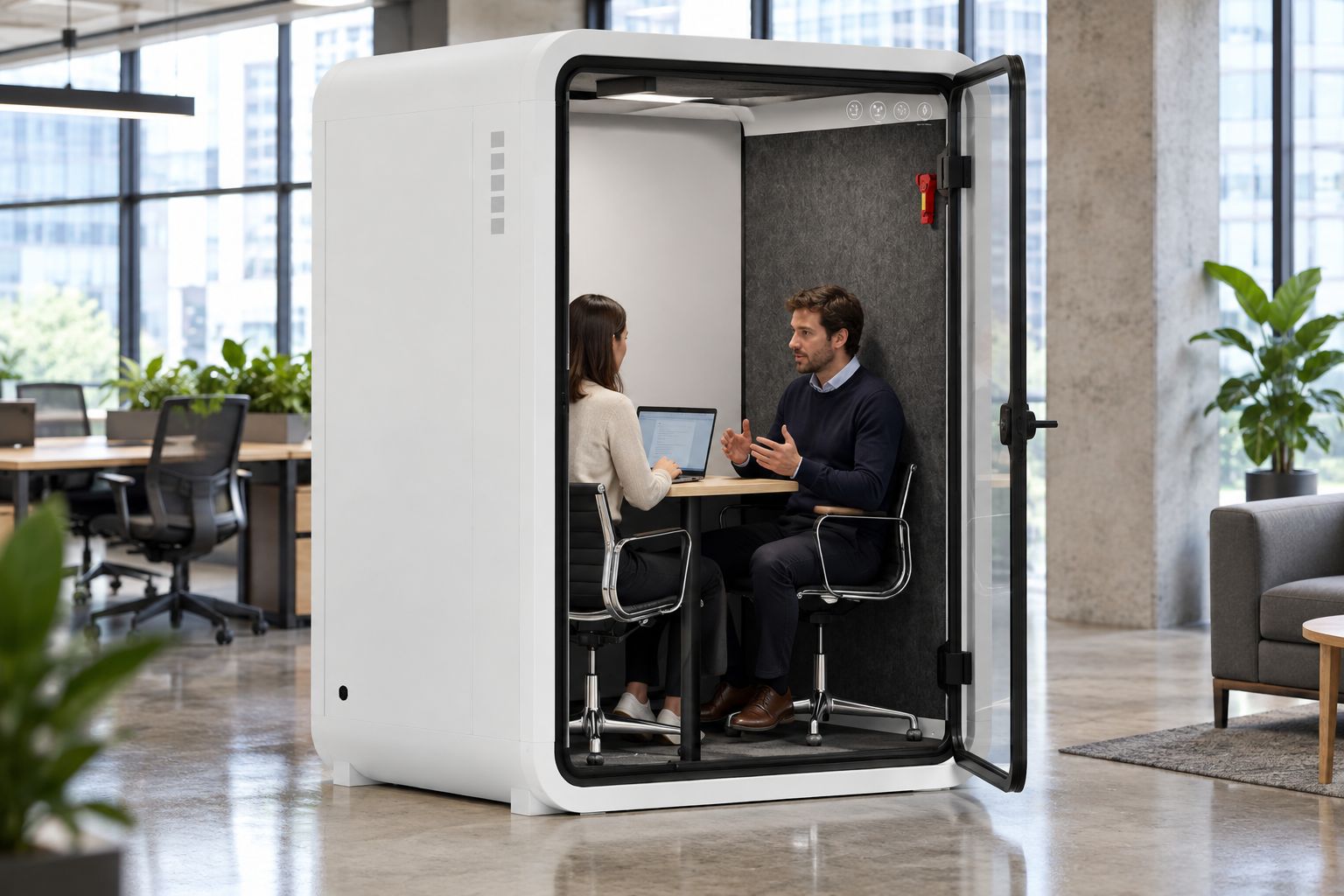
- A 2-person meeting booth handles moderator-plus-respondent sessions or two staff reviewing a transcript together without disturbing the open floor.
- Booths across the Soundbox Store range cut external noise by 30 to 35 decibels, which matters most when a recorded interview needs a clean audio track.
- Placement and furniture decide whether a pod actually gets used daily; size alone does not fix a noisy research floor.
Why office pods matter for market research firms
A research office runs on conversations that cannot be overheard: respondent interviews with personal detail, client debriefs with unreleased findings, and phone screeners that need a clean audio track for transcription. Open-plan floors defeat all three. Background chatter bleeds into recordings, respondents hear other calls and hold back, and moderators lose the thread when a colleague's meeting spills over the desk partition.
The fix most research teams reach for first is a booking system for a single conference room, which collapses the moment two interviews are scheduled at once. Office pods for market research firms solve the scheduling bottleneck by putting several small private spaces on the floor instead of one large meeting room everyone competes for. The Quell Office Pod Solo is sized for exactly this: one researcher, one call, no double-booking.
How to fit out office pods for market research firms
Audit your interview and call volume
Before ordering anything, count what the floor actually does in a working week. Most research teams underestimate how many small, short calls happen compared with the handful of long focus groups everyone remembers.
- Count daily respondent phone and video interviews per researcher
- Count weekly paired sessions (moderator plus note-taker, or two staff on a call)
- Count small group debriefs of three to four people per project cycle
- Note peak overlap: how many of these happen at the same hour
- Flag any recorded interviews that need the cleanest possible audio
Match pod size to your research formats
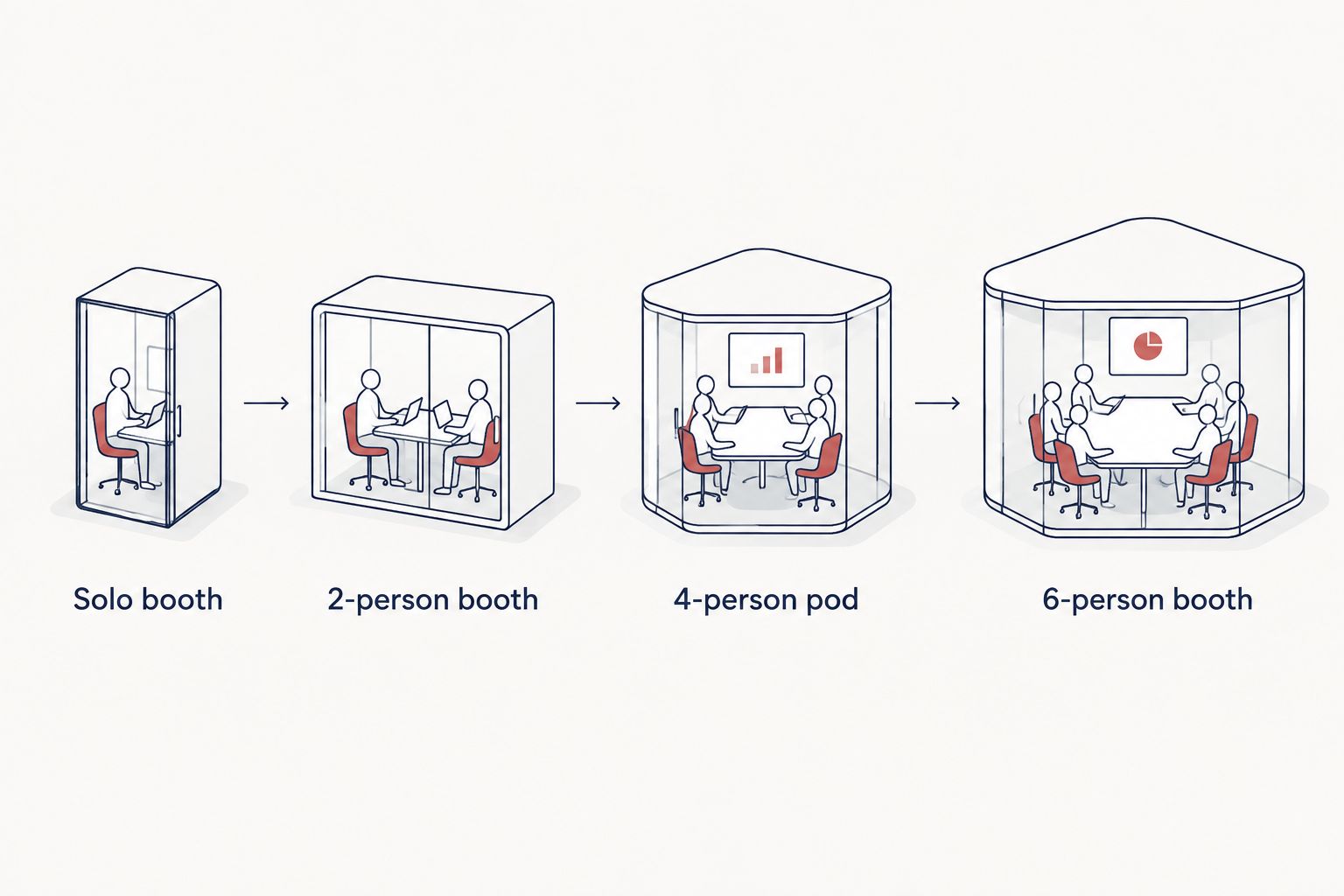
A solo booth, a 2-person booth, and a 4-person pod solve different problems, and mixing sizes gets more use out of the same floor space than buying one size for everyone. The 2-person meeting booth fits a moderator running a paired interview or two analysts reviewing a transcript side by side, while a 4-person Quell pod covers a small focus group debrief without booking the main meeting room.
- Solo booth for one respondent call or one focused writing session
- 2-person booth for moderator-plus-respondent or paired analysis
- 4-person pod for project debriefs and small stakeholder reviews
- 6-person booth for larger client presentations of findings
- Match pod count to your busiest overlapping hour, not your average day
Control noise and echo inside the booth
A booth that looks private but sounds hollow undermines a recorded interview just as much as an open desk. Echo inside a hard-walled enclosure distorts speech before it ever reaches a recorder or a video call microphone.
- Choose a booth with acoustic wall lining rather than a bare shell
- Add ceiling panels if the booth sits under a high or exposed ceiling
- Keep the booth away from HVAC vents and printer rooms
- Test the booth with a real phone call before rolling it out fleet-wide
- Add a wall panel outside the booth if adjoining desks still pick up bleed
Soundbox Store's pods reduce external noise by 30 to 35 decibels across the range, which is the difference between a respondent hearing office chatter in the background of a call and hearing nothing but the interviewer.
Fit out the booth for recording and note-taking
An empty booth with no desk or stable seating turns a 45-minute interview into an uncomfortable one. Furniture decides whether staff actually book the pod or default back to an empty meeting room.
- A small desk surface for a laptop and a notepad
- A chair rated for extended sitting through back-to-back interviews
- Power access for laptops, headsets, and recording devices
- A stool option for quick, standing calls between interviews
- Cable management so cords do not clutter a two-person booth
Plan pod placement across the research floor
Where a pod sits matters as much as what size it is. A booth tucked behind the printer gets ignored; one placed on the path between desks and the kitchen gets overbooked and noisy from foot traffic.
- Spread pods across the floor rather than clustering them in one corner
- Keep at least one solo booth within sight of the main research desks
- Position larger pods near meeting zones, not next to break rooms
- Leave clear walking space around each pod so foot traffic does not add noise
- Review usage after the first month and move underused pods
Compare pod configurations before you buy
Once volume, sizing, and placement are settled, the decision comes down to matching the fleet to how many overlapping calls the floor actually runs. A research team of 15 staff running mostly one-to-one interviews needs more solo booths than group pods; a team running weekly client debriefs needs at least one larger booth.


Pod options for market research firms compared
| Pod | Best for | Key limitation | Verdict |
|---|---|---|---|
| Quell Office Pod Solo | One-to-one respondent phone or video interviews | Fits one person, no room for a note-taker | Buy |
| 2-person meeting booth | Paired interviews or moderator-plus-respondent sessions | Tight once both people bring a laptop and a notepad | Buy |
| 4-person Quell pod | Small focus group debriefs and stakeholder reviews | Doesn't scale to a full focus group over four people | Consider |
| Quell 6-person meeting booth | Larger debrief sessions or client presentations | Takes noticeably more floor space than the smaller booths | Consider |
| Stand-up Folio phone booth | Quick calls between longer interview blocks | Not suited to a 45-minute seated interview | Consider |
Common mistakes market research firms make
- Buying only one pod size. A floor with nothing but solo booths cannot host a moderator-plus-respondent session, and a floor with only large pods wastes space on quick calls.
- Skipping the noise test before rollout. A booth that looks sealed but leaks sound on a real phone call ruins recorded interviews after the fact, not before.
- Placing pods where foot traffic is heaviest. A booth next to the kitchen or printer picks up door noise and footsteps that a recording will capture.
- Ignoring furniture for interview work. A booth with no stable desk surface makes note-taking and laptop use awkward during a live respondent call.
- Under-sizing for peak overlap. Teams that plan for their average day, not their busiest hour, end up with researchers queuing for a pod during fieldwork weeks.
Related reading on soundproof pods for research and development teams covers similar sizing questions for teams running structured project work alongside interviews.
FAQ
What size office pod is best for a one-to-one respondent interview?
A solo booth such as the Quell Office Pod Solo suits one-to-one phone or video interviews, since only one researcher needs the space at a time. A 2-person booth is only needed once a note-taker joins the call.
Can office pods handle recorded interviews without picking up background noise?
Soundbox Store pods reduce external noise by 30 to 35 decibels across the range, which cuts most open-floor chatter from a recorded call. Placement away from HVAC vents and printer rooms matters as much as the booth itself.
How many pods does a market research office need?
Count the busiest overlapping hour in a working week, not the daily average, and size the fleet to that peak. A mixed fleet of solo, 2-person, and one larger pod covers most research floors of 10 to 20 staff.
Do soundproof pods work for small focus group debriefs?
A 4-person pod fits a small project debrief where the team reviews a transcript or discusses findings together. Larger focus groups of five or more need a 6-person booth or a dedicated meeting room instead.
What's the difference between a phone booth and a meeting booth?
A phone booth such as the Folio stand-up model is built for short, one-person calls between longer work blocks. A meeting booth is seated, fitted with a desk, and designed for interviews or discussions lasting 30 minutes or more.
Where should pods sit on a research office floor?
Spread pods across the floor rather than clustering them in one corner, and keep at least one solo booth visible from the main research desks. Avoid placing pods next to kitchens or printers, where foot traffic adds noise to recordings.
One last thing
The detail research teams skip most often is testing a booth with an actual recorded phone call before rolling out the full fleet. A booth that reads as private to the ear can still leak enough noise at 30 dB reduction to distort a transcription tool, and the only way to catch that is a real test call, not a walkthrough with the door shut.


