 no/gb
no/gb



















 Produktguide
How much does it cost to add windows to an office pod?
The cost to add windows to an office pod needs a model-specific quotation, rather than a standard per-window budget. First establish whether you mean glazing in a new pod or a change to an existing enclosure. Ask for the complete scope and any exclusions, not just a figure for the glass.
- The cost to add windows to an office pod needs a quotation for the exact model and proposed change.
- Soundbox Store acoustic office pods suit businesses seeking private call spaces and meeting booths.
- Separate daylight, visual privacy and speech privacy in your window brief.
- Compare complete configurations; do not treat a whole-pod price as a window-upgrade price.
Why this matters
A request for more windows can describe very different workplace needs: seeing out during focused work, bringing borrowed light into a booth, or making a meeting space feel less enclosed. Those are different briefs. Define the problem before asking a supplier to propose a change.
Soundbox Store sells acoustic office pods and meeting booths, including models for individual calls and shared conversations. Start with the intended use, then ask about the glazing configuration of the relevant model.
How much does it cost to add windows to an office pod?
Use a quotation for the exact glazing request as your budget basis. A complete pod price does not establish the cost of an additional window, and a quotation for a new enclosure does not establish the cost of changing one you already own.
These supplied product descriptions identify different workplace uses, but they do not establish a window-addition specification. Treat them as starting points for a configuration enquiry, not as confirmed retrofit options.
| Product | Best for, based on its description | What to establish before discussing windows | Limit of the comparison |
|---|---|---|---|
| Quell Office Pod Solo | Private calls in a 1-person booth | The glazing included in the exact configuration | The product description does not establish a window-addition option |
| Office Phone Booth Quell - 2 Person | Private meetings for 2 people | The glazing arrangement around the meeting positions | Capacity does not establish glazing choices or modification scope |
The benefit of starting with a named model is precision: the supplier can respond to a specific enclosure rather than an abstract window request. The limitation is equally clear. A model name alone does not confirm that additional glazing is offered.
Keep the base pod and the proposed change separate in your enquiry. Otherwise, you risk comparing a complete enclosure with an accessory or a revised configuration, even though they represent different purchases.
Separate a new-pod enquiry from an existing-pod enquiry
When you are specifying a new pod
Ask the supplier to identify the glazing included in the proposed configuration. Then ask whether a different arrangement is offered for that exact model, and request a separate description of any difference.
This approach lets you compare the complete configurations before choosing one. Its limitation is that you cannot assume a preferred window arrangement exists simply because you have seen a similar-looking pod elsewhere.
Your enquiry should distinguish what you need from what you would prefer. For example, seeing out during a call is a functional requirement; wanting glass on a particular side is a proposed solution. Give the supplier both, without treating the solution as settled.
When you already own the pod
Identify the existing enclosure before asking about a change. Provide its model name, the configuration you have and photographs showing the area you want to discuss. Ask the original supplier whether it offers a suitable change for that enclosure.
The benefit is that your enquiry starts from the actual pod. The limitation is that ownership of a model does not establish that a later glazing change is supported.
Keep this stage to an assessment and quotation request. Do not turn a general window enquiry into instructions to alter the enclosure. A proposed change and a confirmed product option are not interchangeable.
Define what the window needs to achieve
Write the intended outcome in a short sentence before discussing glass. That sentence gives the supplier something practical to answer and gives your team a basis for judging the proposal.
For a private-call booth, your priority might be a view into the office without exposing the caller's screen. For a meeting booth, it might be a more open visual connection while keeping the conversation separate from surrounding activity. These are example briefs, not claims about a particular product's glazing.
A view out
Describe where the user sits or stands and what they want to see. A general request for more glass does not explain whether the useful view is ahead, beside the work position or behind it.
The advantage of this brief is clarity about the user's experience. The trade-off is that an outward view also raises questions about inward views, especially around screens and written work.
Borrowed daylight
If your objective is daylight, identify the light source in the surrounding office. A transparent pod panel does not create daylight; it provides a potential path for light already present outside the enclosure.
Ask the supplier to discuss the proposed configuration in that context. Do not use the presence of glass as a substitute for considering the room, the user's position and the direction of light.
A less enclosed appearance
If appearance is the main concern, say so. That lets you assess the visual effect separately from speech privacy and the practical needs of the work taking place inside.
More visibility is not automatically more useful. A booth used for confidential conversations has a different visual brief from one used for ordinary calls beside a shared desk area.
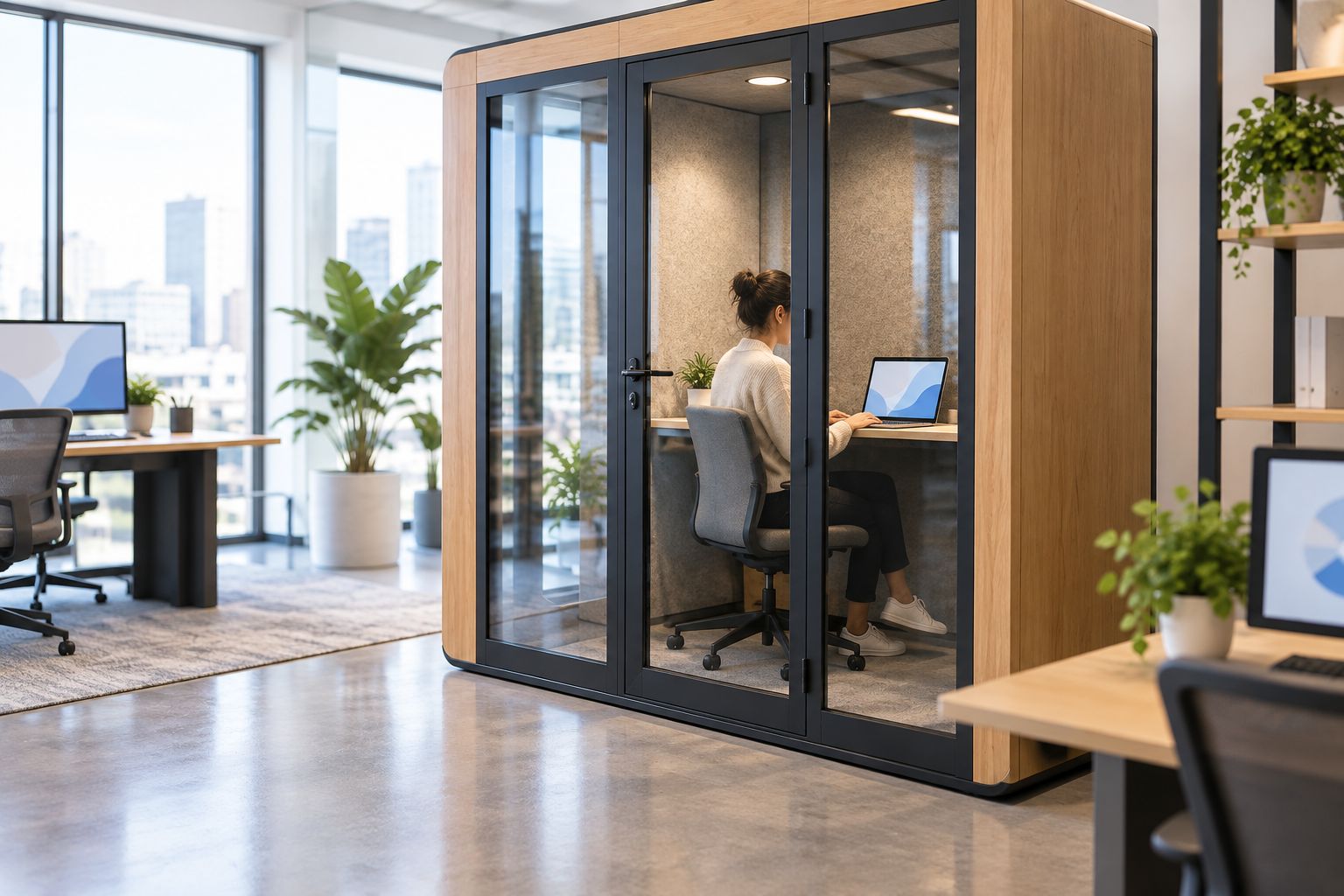
What an office-pod window quotation needs to distinguish
A useful quotation explains what is being proposed, not merely what it is called. Ask the supplier to distinguish the following points in its response:
- Exact model: identify the pod the proposal concerns, rather than referring only to an office booth.
- Existing or new enclosure: state whether the enquiry concerns a current pod or a complete new configuration.
- Included glazing: distinguish the starting configuration from the requested difference.
- Workplace use: specify private calls, focused work or shared meetings so the proposal addresses the right activity.
- Visual privacy: describe the sightlines you want to retain and those you want to limit.
- Acoustic scope: ask what performance information applies to the configuration being discussed.
These points organise the quotation request; they are not a claim that each is a separately priced option. Keep that distinction explicit when you brief colleagues or seek internal approval.
Ask the supplier to identify exclusions alongside the proposed scope. If an item remains subject to confirmation, keep it separate from the agreed specification rather than quietly treating it as included.
Compare glazing choices without confusing their purpose
The first comparison should be between outcomes, not between assumed glass specifications. A view, daylight and visual privacy overlap, but they are not the same requirement.
| Brief | Best for | Benefit you are seeking | Trade-off to discuss |
|---|---|---|---|
| Clear outward view | Users who want visual connection with the office | Visibility beyond the enclosure | Inward sightlines towards the user and work surfaces |
| Borrowed daylight | Pods positioned near an existing daylight source | A path for surrounding light | Whether the proposed arrangement addresses the actual light direction |
| Greater visual separation | Conversations or work needing reduced visibility | Less exposure to surrounding observers | Reduced visual connection with the wider office |
Use this table to describe your priorities, not to assume that every arrangement is offered on every pod. Ask for the actual choices associated with the named model.
Avoid treating visual privacy as evidence of speech privacy. An obscured view tells you about visibility; it does not establish how much speech passes through the complete enclosure.
Keep acoustic performance attached to the configuration
Soundbox Store describes its acoustic office pod range with 30–35 dB noise reduction. That range-level statement is not evidence for a proposed additional window or a changed enclosure.
Ask which performance information applies to the exact configuration under discussion. Keep the model, glazing arrangement and performance description together in the written proposal, rather than transferring a figure from another enclosure.
This matters when you compare a private-call booth with a shared meeting booth. The number of people identifies the intended occupancy, but it does not answer the glazing question or establish the performance of a proposed change.
Do not approve a window proposal on appearance alone when speech privacy is part of the brief. Equally, do not infer a visual benefit from an acoustic figure. Review each requirement against the relevant information.
Build a clear quotation request
You do not need a technical glass specification to make a useful first enquiry. You need an identifiable pod, a clear workplace purpose and an accurate description of the change you want to explore.
- Name the enclosure. Give the exact product or existing model, rather than asking about windows for pods generally.
- State the work. Explain whether the space supports individual calls, focused work or meetings.
- Describe the outcome. Choose the relevant priority: outward visibility, borrowed daylight or visual separation.
- Show the context. For an existing pod, include photographs that explain the current arrangement and your intended sightlines.
- Request a defined proposal. Ask whether a suitable option is offered and what the quotation includes and excludes.
- Request configuration-specific information. Keep the proposed arrangement and its relevant performance information in the same response.
The advantage of this process is a brief that different decision-makers can understand. Its limitation is that a well-written enquiry still does not establish product compatibility or confirm an offered modification.
Ask for clarification wherever the response describes a general possibility rather than the exact enclosure. A useful proposal should answer your brief without requiring you to fill the gaps yourself.
Review the proposal before setting the budget
Read the proposed scope against your original objective. If you asked for an outward view, check that the response addresses the user's position; if you asked for daylight, check that it addresses the surrounding room rather than merely naming glass.
Keep a record of the base configuration and the proposed difference. This prevents a later comparison from treating a complete new pod, an accessory and an enclosure change as equivalent purchases.
For internal approval, summarise the workplace need, the identified model, the supplier's proposed scope and any unresolved questions. Approve a defined configuration, not an unexplained window allowance.
If the response does not answer the original need, revise the brief before progressing. A different arrangement is only useful when it solves the problem you set out to address.
FAQ
Can I use a standard per-window budget for an office pod?
Use a quotation for the exact pod and proposed glazing scope instead of a standard per-window allowance. Distinguish a new configuration from a change to an existing enclosure.
Does a complete office-pod price include extra windows?
A complete office-pod price does not establish whether extra windows are included. Ask the supplier to identify the included glazing and describe any proposed difference separately.
Can I add a window to a pod I already own?
Ask the original supplier whether it offers a suitable change for your exact enclosure. Provide the model and current configuration; do not assume a glazing change is supported.
Will a window give my office pod more daylight?
A window does not create daylight; it provides a potential path for light present outside the pod. Describe the surrounding light source and intended user position in your enquiry.
Does privacy film provide the same privacy as an acoustic enclosure?
Visual privacy and speech privacy are different requirements. Discuss sightlines separately from the acoustic information for the complete pod configuration.
Which Soundbox Store pod should I start with for private calls?
Quell Office Pod Solo is described as a 1-person phone booth designed for private calls. Use its exact model name when asking about included glazing; its description does not establish a window-addition option.
One last thing
Before requesting another window, write down what you cannot do comfortably in the current arrangement. Seeing out, receiving daylight and limiting inward views each point to a different discussion.
The best next move is a clearer brief, not a guessed glass specification. Send the supplier your intended outcome and ask for an exact-model response before attaching a budget to the change.

