 en/ch


 Product guide
Office pods for medical spa and aesthetics clinics: complete guide
A medical spa or aesthetics clinic needs one quiet, private place for consultations that is not a treatment room. A soundproof pod beside reception does that job. The 2-person Quell office phone booth is the strongest starting point for most clinics.
- Office pods for medical spa consultations give you a private space for assessments, treatment planning and phone follow-ups without building a room.
- The 2-person Quell booth is the best fit for a one-to-one consultation with a seat for the client.
- A solo pod suits calls and bookings. A 4-person pod suits team huddles and partner consultations.
- A pod is a consultation space, not a treatment room. Keep treatments in your clinical rooms.
Why office pods matter for medical spas and aesthetics clinics
Medical spa consultations are personal. A client explains what they dislike about their skin or body, asks about treatment options and talks through budget. That conversation does not belong at the reception desk or in a corridor.
Most clinics solve this badly. Consultations happen in a treatment room that should be earning revenue, in a waiting area where other clients can hear, or in a back office that feels like an admin cupboard. Each option costs you either a bookable room or client comfort.
A pod gives you a dedicated, enclosed consultation space on the clinic floor. Soundbox Store describes its pods as tested to ISO 23351-1:2020 with 30–35 dB of noise reduction, so conversations stay inside the booth rather than carrying across the waiting area.
Verdict: Soundbox Store's 2-person Quell booth is the best pod for a medical spa that needs one private consultation space beside reception. It is built for two people to talk privately, which matches the shape of a consultation.
Pods also solve a second problem: staff phone calls. Booking changes, aftercare follow-ups and supplier calls all happen in clinic corners today. A solo pod takes those calls out of earshot of clients.
How to set up an office pod for consultations
Start with the free, manual work. Walk the clinic, note where private conversations happen now and decide what you need before you look at any product. The steps below follow that order.
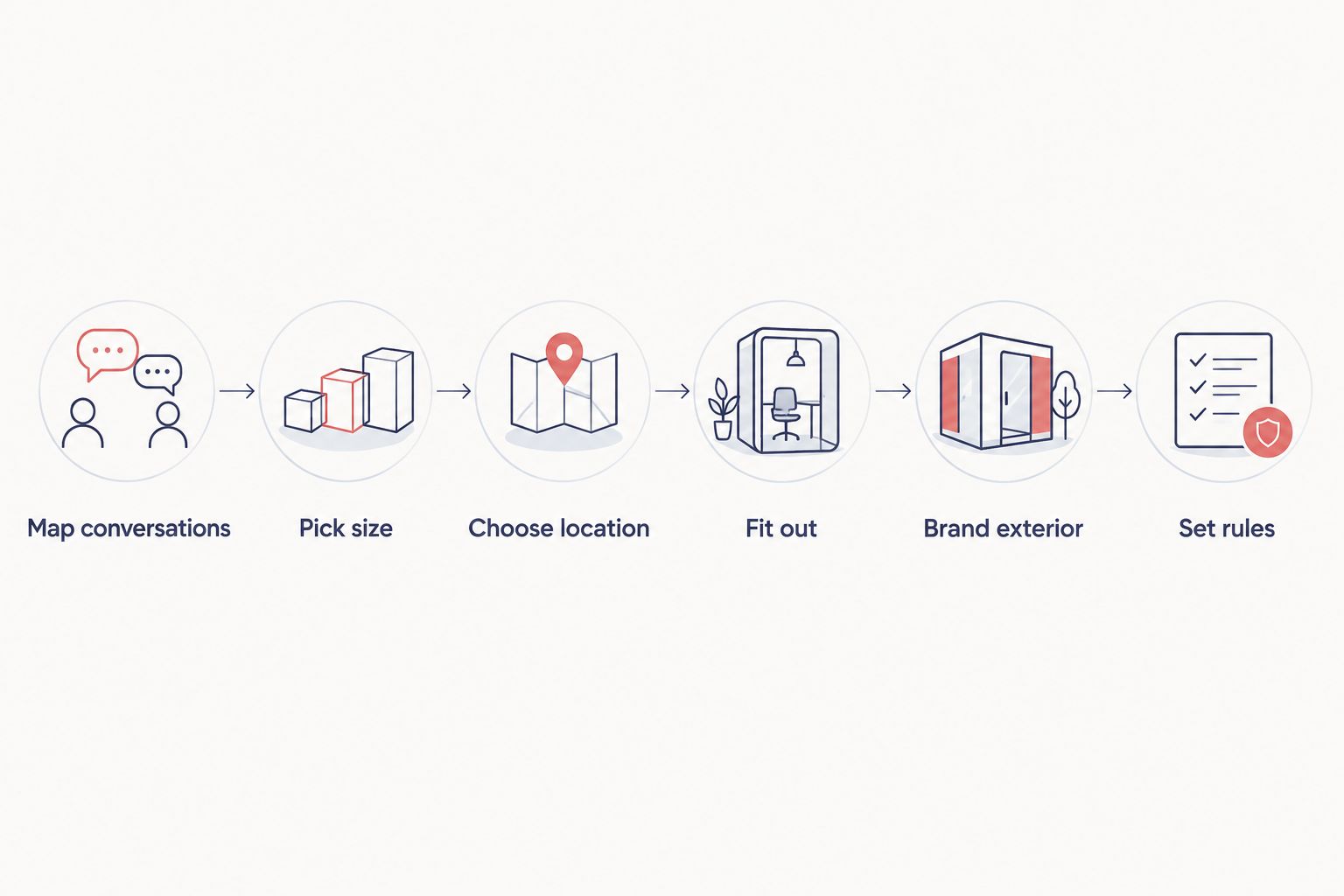
Map your private conversations
List every conversation that currently happens in the wrong place. Be specific about who is talking and for how long.
- New client consultations before any treatment is booked
- Treatment planning and follow-up reviews
- Pricing and payment plan discussions
- Aftercare and results check-ins by phone
- Staff calls with suppliers or practitioners
- Video consultations with remote clients
Count how often each happens in a normal week. The most frequent conversation sets the size of pod you need.
Pick the size
Match the pod to the conversation, not to the floor space you happen to have free.
- Solo pod: one person on a call or video consultation
- 2-person booth: one practitioner and one client, or a client and a companion
- 4-person pod: a practitioner, a client and one or two others, or a team huddle
- 6-person pod: staff briefings and group planning
If you run one-to-one consultations, buy the 2-person booth. Do not overbuy for the occasional group meeting, which can happen elsewhere.
Choose where it sits
Place the pod close enough to reception that clients walk there naturally, but not in the main waiting area. Aim for a spot where a client can be shown in without crossing other clients.
Check the practical basics before you order: floor space around the pod, the route it takes to get inside and where the power will come from. Soundbox Store's own guides cover these, and the how-to-buy guidance on the site is the place to confirm sizes and access.
Fit it out for consultations
A consultation is a conversation, so comfort matters more than gadgets. Think about what the client will see and touch.
- Seating the client can stay in comfortably for a 20 to 30 minute chat
- A small surface for a tablet, forms or product samples
- Lighting that looks flattering rather than clinical
- A screen or tablet for showing treatment information
- A privacy treatment for any glazed panels if you want extra discretion
Soundbox Store sells pod furniture sized for each pod, so you can match seating to the booth rather than guess.
Brand the exterior
A plain pod in a polished clinic looks like office equipment. A branded exterior makes it look like part of the clinic. The Office Pod wrap option lets you apply custom branding to the outside of a Quell booth, so the pod matches your colours and signage.
This is optional. If your reception is minimal and neutral, a standard finish may suit it better.
Set simple rules for use
A pod only helps if people use it properly. Decide this before it arrives.
- Consultations have priority over staff calls
- Staff calls move to the solo pod if one is free
- Clients are shown in and out by a named team member
- The pod is wiped down and reset between uses
- Equipment and paperwork are cleared away at the end of each session
Write the rules on one page and put it where the team will see it.
Which pod fits which job
This table compares the pods that suit a clinic. Pick by the conversation you have most often.
| Option | Best for | Key limitation |
|---|---|---|
| Quell Office Pod Solo | Staff calls, bookings and video consultations | One person only, so not a client consultation space |
| 2-person Quell booth | One-to-one client consultations | Tight for a client plus a companion and a practitioner |
| Folio office phone booth | Quick private calls in a small footprint | Single-person format, suited to calls rather than consultations |
| 4-person Quell pod | Partner meetings and team huddles | Takes more floor space than most reception areas can spare |
| 6-person Quell booth | Staff briefings and training | Too large for most single-site clinics |
The honest trade-off: a pod gives you privacy and sound reduction, but it is a compact enclosed room. It does not have a treatment couch, plumbing or the clinical facilities of a treatment room. Use it for talking, not treating.


Common mistakes medical spas make with pods
- Buying a pod to replace a treatment room. A pod is for conversations. Treatments need the facilities of a proper treatment room.
- Choosing the biggest pod on the page. Most consultations involve two people. A 6-person pod wastes floor space you need for your waiting area.
- Putting the pod in the waiting area. Clients should not walk past other clients to reach it. Place it near reception, with a clear route.
- Ignoring how it looks. A pod that clashes with your clinic design feels like an afterthought. Plan the finish and furniture from the start.
- Skipping the rules. Without a booking order, staff calls take over the pod and consultations wait.
FAQ
What size pod do I need for a medical spa consultation?
A 2-person booth suits most consultations, as it seats one practitioner and one client. Choose a 4-person pod only if you regularly see clients with a companion or hold partner meetings.
Can I use an office pod as a treatment room?
No. A pod is designed for private conversations and calls, not clinical treatments. Keep treatments in your treatment rooms and use the pod for consultations and planning.
Will a pod stop other clients hearing a consultation?
Soundbox Store describes its pods as tested to ISO 23351-1:2020 with 30–35 dB of noise reduction, which keeps conversation largely inside the booth. Placement still matters, so position it away from the main waiting area.
Can I put my clinic branding on a pod?
Yes. Soundbox Store offers a custom wrap option for Quell booths, which lets you apply your own branding and design to the exterior.
Is a solo pod useful for a clinic?
Yes, for staff. A solo pod takes booking calls, supplier calls and video consultations out of earshot of clients, which frees the consultation booth for clients.
How do I choose between a pod and a partition?
A pod is a self-contained enclosed booth, so it works where you cannot build or alter walls. Choose a partition only if you have permanent space and want a fixed room.
One last thing
The pod that earns the most in a clinic is often the smallest one. Put a solo pod near the treatment rooms for staff calls and your consultation space stays free for clients. That one change stops reception being used as a phone room.


