 it/gb
it/gb



















 Guida ai prodotti
Office Pods for Dietitian Clinics: Quell Solo Wins
Dietitian and nutrition clinic pods give patients a private, enclosed space for consultations, weigh-ins and dietary reviews, so sensitive health conversations stay out of earshot of reception and other patients. A single-dietitian practice needs something different from a multi-practitioner clinic that also runs group sessions or a block of telehealth calls each week.
- Office pods for dietitian clinics keep consultations confidential without a full room build-out.
- The Quell Office Pod Solo suits one-to-one work; the Office Phone Booth Quell 2-Person suits sessions with a carer or interpreter.
- Soundbox Store pods carry 30-35 dB noise reduction, tested to ISO 23351-1:2020, enough to stop consultation detail reaching a waiting area.
- A smart lock option keeps patient files or a scale secure inside the booth between appointments.
Why office pods matter for dietitian clinics
Dietitian consultations cover body measurements, medical history and eating patterns that patients don't want overheard by whoever is sitting in the next chair. Most clinics run consultations in the same open-plan space as reception and admin, so real privacy needs a physical enclosure rather than a door at the end of a shared corridor.
A single-dietitian practice usually needs one booth sized for two: the dietitian and the patient. A larger clinic running several practitioners at once needs a mix of solo and two-person pods, because sessions differ - some patients come alone, others bring a partner, carer or interpreter. The Quell Office Pod Solo covers one-to-one work; sessions with a second person need a larger booth instead.
Setting up pods for a dietitian clinic comes down to six decisions: room footprint, booth capacity, acoustic performance, furniture, security and telehealth readiness. Work through them in that order and the booth choice stops being a guess.
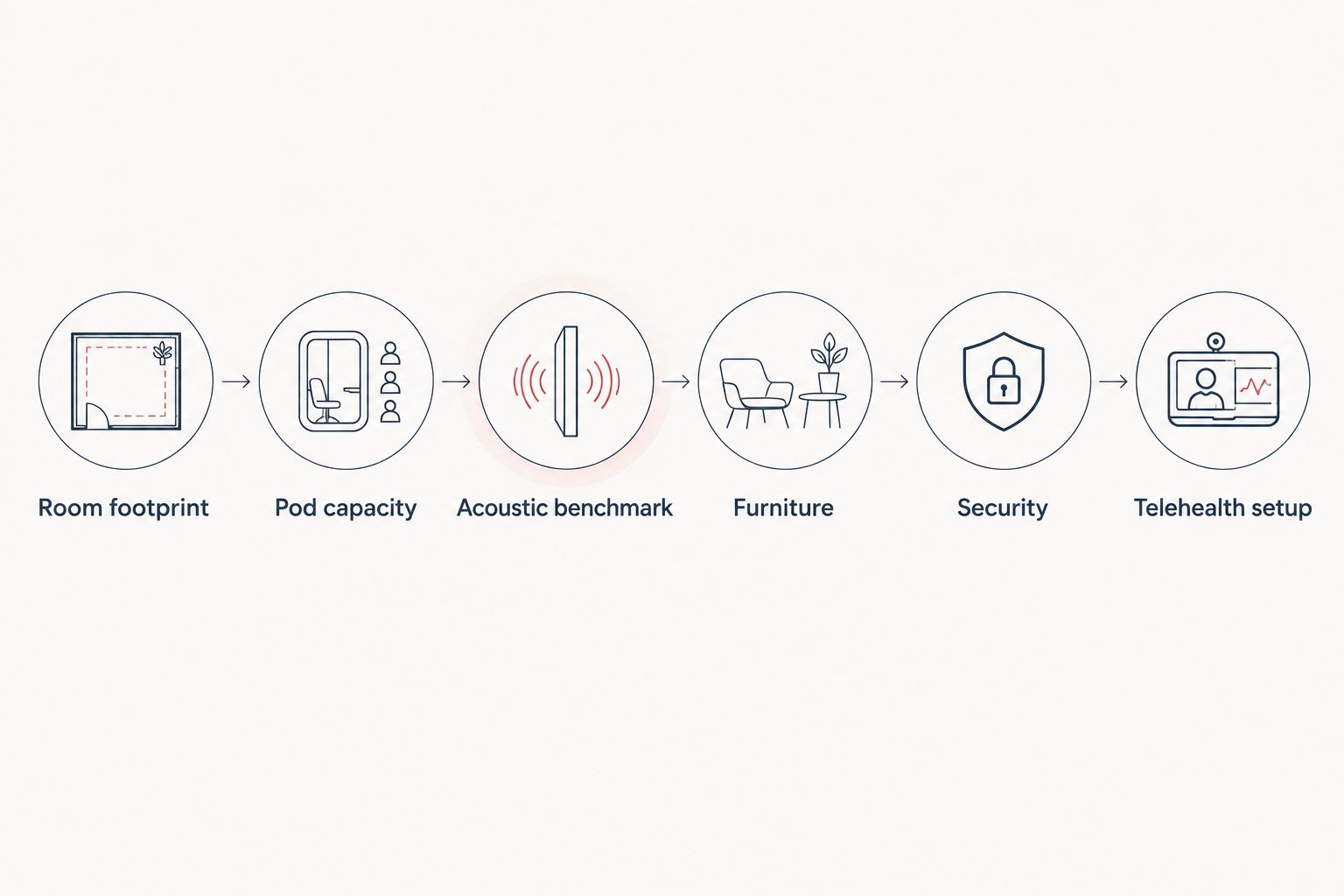
Map your consultation room footprint
Start with the space you already have, not the pod you like the look of.
- Measure the existing consultation room or open-plan area where the booth will sit
- Note how sound already carries through walls, doors or ceiling tiles
- Check power outlet positions for laptops, scales and monitors
- List peak clinic hours versus quiet stretches
- Note where reception and waiting seating sit relative to the space
Choose pod capacity for your clinic type
Solo consultations fit a one-person booth. Sessions where a partner, carer, interpreter or student sits in need more room than a solo booth allows.
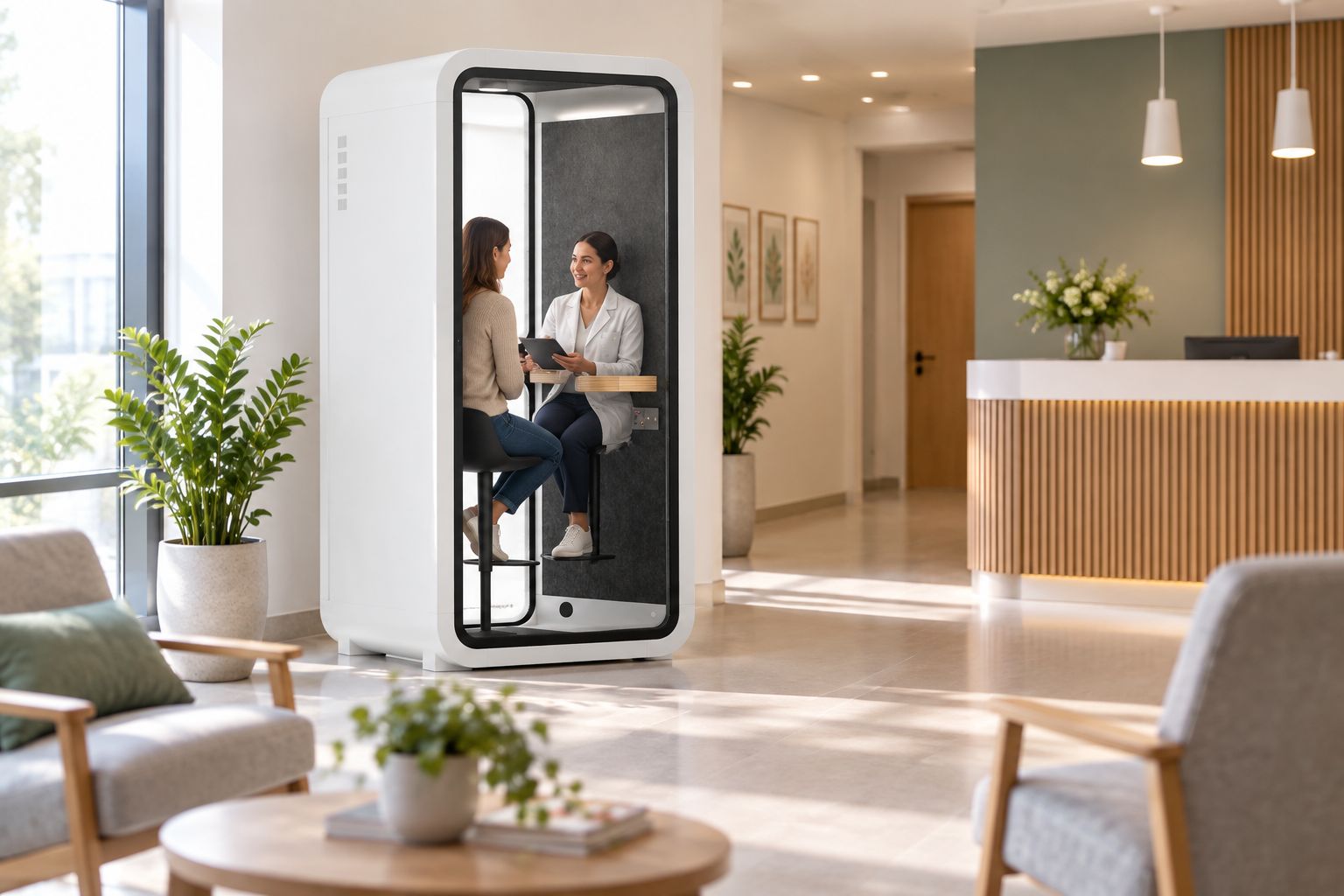
- Solo consultations: one dietitian, one patient
- Carer or interpreter present: a two-person booth
- Group nutrition sessions with three or four patients: a larger booth
- Telehealth-only dietitians: a solo booth doubles as the call space
The Office Phone Booth Quell - 2 Person covers consultations where a carer, interpreter or student joins the session, without cramming three people into a booth built for two.
Set an acoustic benchmark before you buy
Not every enclosed booth blocks sound the same way. Soundbox Store pods are tested to ISO 23351-1:2020 with a 30-35 dB noise reduction range, which is the figure worth asking any supplier for before comparing anything else.
“A consultation booth only earns its floor space if the patient sitting just outside the door can't follow the conversation.”
- Ask any pod supplier for its tested noise reduction figure in dB
- Confirm which standard the figure was measured against
- Check the figure covers the door seal, not just the wall panels
- Compare that figure against how loud your waiting room actually gets
Furnish the booth for consultations and paperwork
A booth with no desk or chair still forces awkward laptop balancing during a session. Furniture choice matters as much as the booth itself.
- A small desk or shelf for a laptop, tablet and scale readout
- A chair for the dietitian and a chair or bench for the patient
- Room to stand during a weigh-in, if the clinic does them standing
- Enough desk depth for a paper folder if records aren't fully digital
Secure patient files and equipment between sessions
A booth that stays unlocked between appointments leaves files or a scale visible to whoever walks past. The smart lock office pod security system addresses that gap directly.
- Lock the booth when it's not in session so files aren't left on view
- Keep scales and equipment inside rather than wheeling them in and out
- Give each practitioner their own access rather than a shared key
- Log who used which booth and when, if the clinic needs an audit trail
Plan for telehealth and video consultations
Many dietitian services now run remote follow-ups alongside in-person visits from the same booth, so the setup needs to work for both.
- Position the booth near a power outlet for laptop and webcam charging
- Check lighting doesn't backlight the practitioner on camera
- Test ambient noise during a live video call, not just in an empty room
- Keep a stable wired or wireless connection inside the booth if the office wifi is patchy
Compare pod options for dietitian clinics
| Option | Best for | Key limitation |
|---|---|---|
| Quell Office Pod Solo | One dietitian, one patient, standard consultations | Not built for sessions with a third person present |
| Office Phone Booth Quell - 2 Person | Consultations with a carer, interpreter or student | Takes more floor space than a solo booth |
| Office Pod Quell+ Acoustic | Practices wanting the highest-specification solo booth | Same one-person capacity as the standard solo pod |
| Office Phone Booth Folio - Stand Up | Quick weigh-ins or short standing calls between full sessions | Not suited to seated, longer consultations |


Common mistakes dietitian clinics make
- Sizing a booth by desk space instead of patient volume, then queuing patients within earshot of the door
- Skipping an acoustic benchmark and assuming any enclosed booth is quiet enough for eating-disorder or mental-health-adjacent conversations
- Booking the same booth for telehealth calls and in-person visits without checking lighting or connection first
- Leaving patient files or a scale visible through a glass panel instead of using in-booth storage
- Buying one universal booth size for a multi-dietitian clinic instead of mixing solo and two-person options
FAQ
What size office pod does a dietitian clinic need?
Most one-to-one dietitian consultations fit a one-person booth like the Quell Office Pod Solo. Add a two-person booth for sessions with a carer, interpreter or student present.
How much noise reduction does a consultation booth need?
Soundbox Store pods carry 30-35 dB noise reduction tested to ISO 23351-1:2020, enough to stop consultation detail carrying into an open-plan waiting area. Ask any supplier for their tested figure before comparing options.
Can a dietitian run telehealth calls from the same booth as in-person consultations?
Yes, a solo or two-person booth works for both. Position it near a power outlet and check lighting and connection quality before relying on it for video calls.
Do dietitian clinics need a locking pod for patient records?
A smart lock keeps files or a scale secure inside the booth between sessions instead of left visible when the room is empty.
What's the difference between a solo pod and a two-person booth for a clinic?
A solo pod fits one dietitian and one patient. A two-person booth adds room for a carer, interpreter or student without cramming three people into a one-person space.
How many pods does a multi-dietitian clinic need?
It depends on how many practitioners see patients at once. Mixing solo and two-person booths covers most consultation types without over-ordering one size.
One last thing
The detail most clinics miss: a booth bought for in-person consultations quietly becomes the telehealth room three days a week once dietitians realise it's the only spot with consistent lighting and no hallway noise. Size the booth for video calls from the start rather than retrofitting the setup later.


