 it/gb
it/gb


















 Guida ai prodotti
Office Pods for Title and Escrow Companies: 2026 Guide
Title and escrow companies handle closing calls, notary signings, and wire-instruction confirmations that need real privacy, and office pods for title and escrow companies deliver that privacy without construction or a lease amendment.
- Office pods for title and escrow companies fit closing rooms, wire calls and notary signings without construction.
- The Quell Office Pod Solo suits one person on a wire-verification call; a 2-person booth suits single-signer closings.
- Pods from Soundbox Store are tested to ISO 23351-1:2020 with 30-35 dB noise reduction, per the manufacturer's own specs.
- Skip a solo pod for a three-party closing; buyer, seller and escrow officer need at least a 4-person pod.
Why office pods matter for title and escrow companies
Title and escrow work runs on conversations that can't be overheard: wire instructions, account numbers, settlement figures, and signature witnessing. A branch floor with a phone bank, a printer wall and a walk-in lobby doesn't give escrow officers anywhere quiet to run those calls without leaving the building or booking the one conference room everyone else wants too.
A Quell Office Pod Solo built for one-on-one calls solves the wire-verification problem directly: the officer steps into the booth for the confirmation, and the conversation with its account digits stays off the open floor. Escrow officers spend as much of the day confirming wire details over the phone as they do meeting clients face to face, and every one of those calls carries information most compliance teams would flag as sensitive.
A pod rated at 30-35 dB noise reduction under ISO 23351-1:2020 keeps that conversation contained inside the booth instead of drifting across the desk pods next to it. Most title branches also sit inside a larger real estate transaction chain; the buyer-and-seller side of that same closing day is covered in a separate guide on soundproof meeting pods for real estate agencies, which is worth a look if your branch shares floor space with agents.
How to plan office pods for title and escrow companies
The six steps below go from mapping which calls actually need privacy through to scheduling the pod once it's installed. The pod choice itself doesn't come until step three, after the branch has actually worked out what it's solving for.
Map the conversations that actually need privacy
Start with a plain list, not a purchase order. Walk the branch for a day and note every call or meeting an officer has to step away for, or wishes they could.
- Wire-instruction confirmation calls with buyers and sellers
- Notary signings for the full closing package
- Underwriter or lender verification calls
- Escrow disbursement conversations that reference account numbers
- Coordination calls with the real estate agent ahead of closing day
Measure your branch floor before picking a pod size
A tape measure and a walk around the floor answers most of this before any product gets involved. Note where the noise actually comes from, not just where there's empty carpet.
- Clear floor footprint needed for the pod's entry and exit
- Ceiling height clearance in the spot you're eyeing
- Distance from the nearest power outlet run
- How close the spot sits to the phone bank or lobby noise
- Walking path clearance for staff and visiting clients
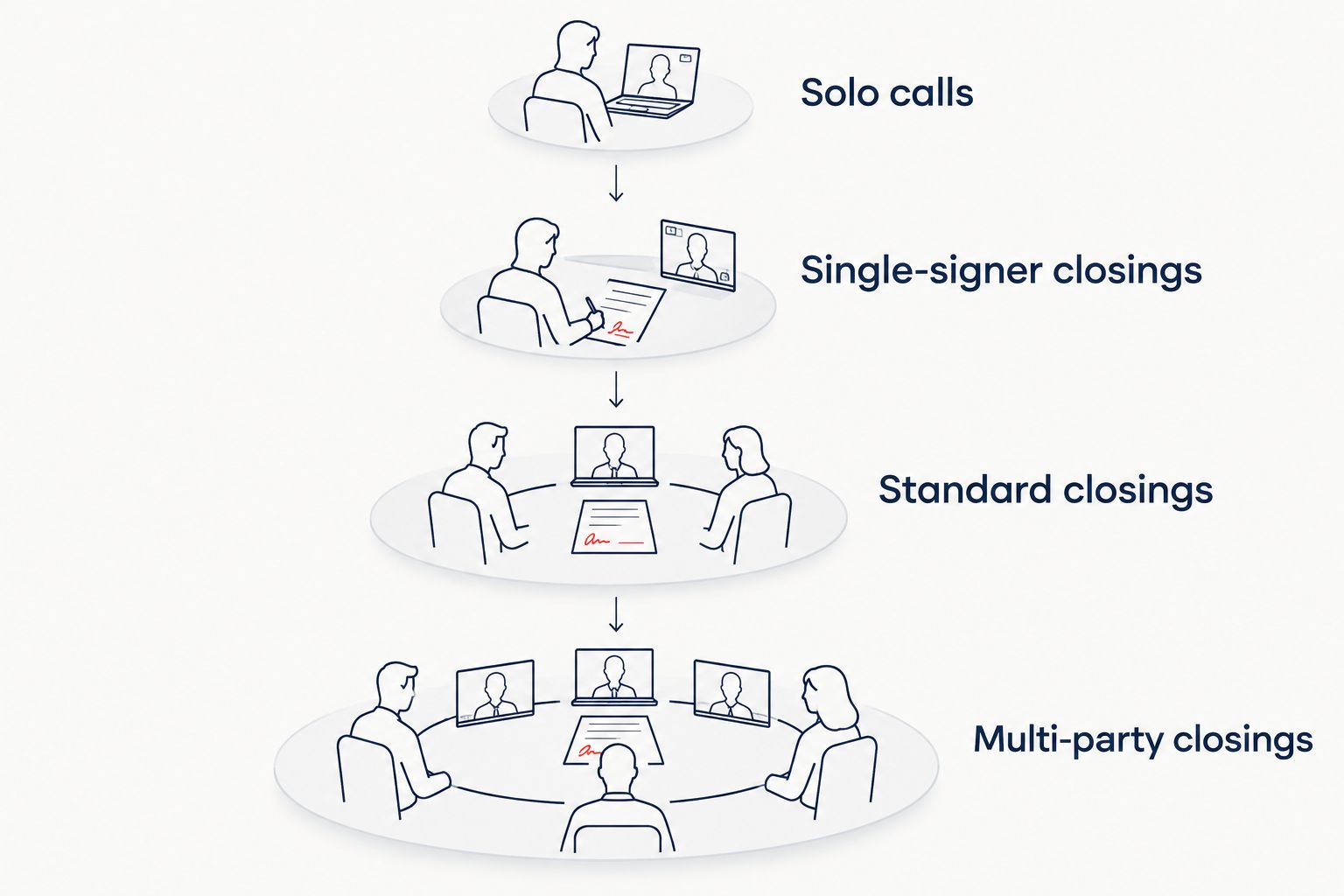
Match pod capacity to the meeting type, not the room
This is where the branch's own call map from step one turns into a size decision. A single officer taking wire calls needs a different footprint than a full closing with four signatures on the table.
- Solo call or wire-confirmation booth: one escrow officer, no second chair needed
- Single-signer closing: a 2-person booth fits an officer and one signer at a shared desk
- Standard residential closing: a 4-person pod holds buyer, seller and agent alongside the escrow officer
- Multi-party commercial closing: a larger 6-person booth covers attorneys, lenders and multiple signers
Check the noise reduction rating against your branch noise
Listen to the floor at its loudest point in the day before trusting a spec sheet. Then compare that to what the manufacturer publishes.
- The ISO standard the manufacturer tested against
- The dB reduction range published for that standard
- Whether the rating covers the full enclosure or just the wall panels
- How loud the phone bank and lobby run at midday, by comparison
- Whether the spot measured in step two sits inside or outside that noise zone
Soundbox Store pods are tested to ISO 23351-1:2020 with a 30-35 dB noise reduction range, which covers most branch floors where the loudest sustained noise is a phone bank and a printer, not machinery.
Equip the pod for signings and video notarization
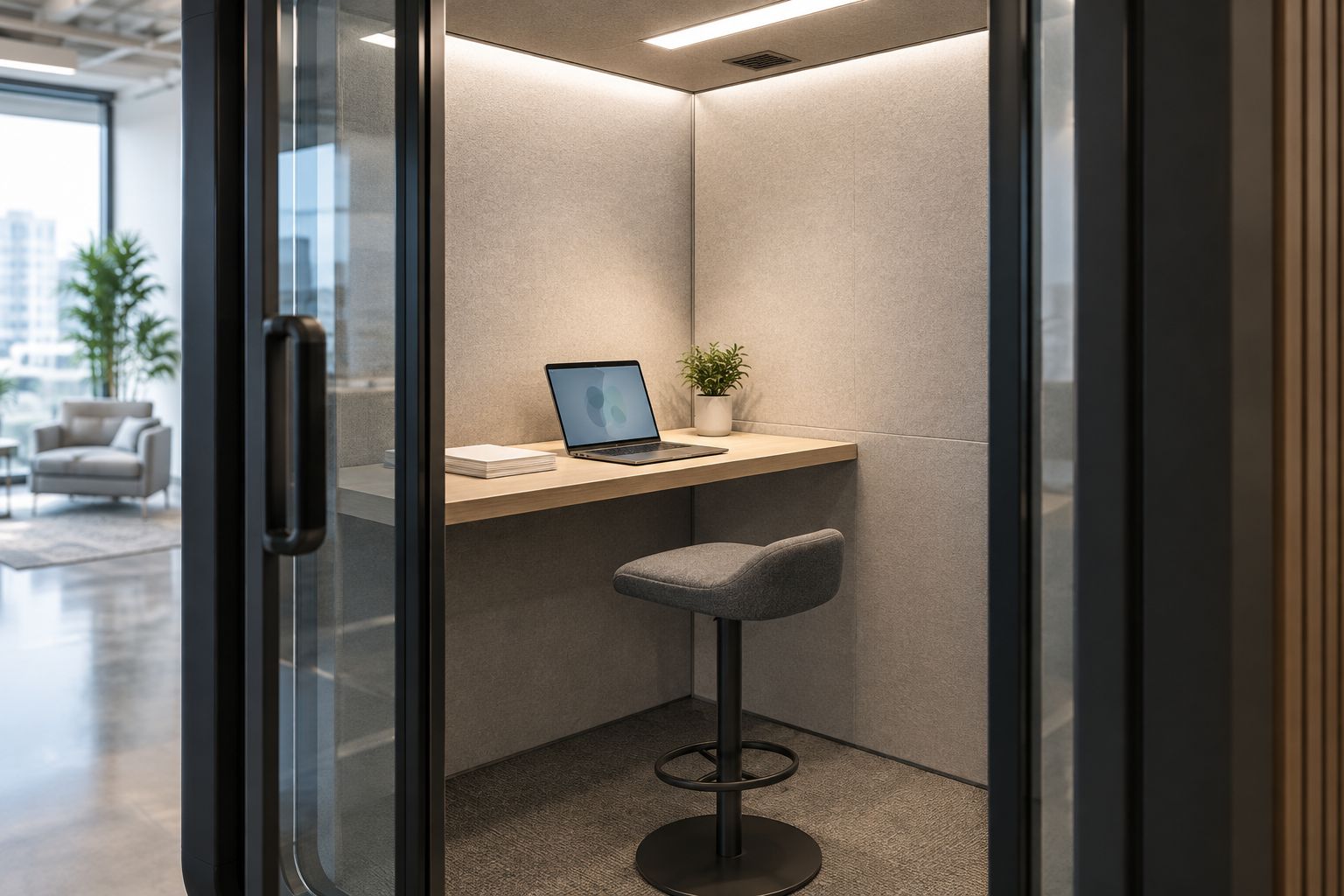
A rolling cart with a laptop gets a branch through its first week in a pod. Furniture built for the specific pod size fixes the parts that improvised setups don't: desk height, cable routing, and camera angle for video notarization.
- Desk surface sized to spread a full closing package
- Stool or chair sized for the booth's footprint
- Task lighting angled for the camera during video notarization
- Power and USB access for a laptop, signature pad and webcam
- A small shelf or ledge for a portable scanner
Secure documents and schedule the pod between closings
A shared calendar sheet solves most double-booking problems before any hardware gets involved. What it doesn't solve is a pod sitting mid-closing with signed documents on the desk while the next appointment waits outside.
- A shared booking calendar to stop double-booking on closing day
- A lock option for the pod on days it holds signed packages briefly
- Clear "in use" signage visible from the lobby
- A quick reset routine between back-to-back signings
- Staff guidance on how far ahead to book for larger closings
Compare office pod options for title and escrow branches
| Option | Best for | Capacity | Key limitation |
|---|---|---|---|
| Quell Office Pod Solo | Wire-verification calls, one escrow officer | 1 person | No room for a second signer at the desk |
| Quell 2-Person Meeting Booth | Single-signer closings with an escrow officer | 2 people | Tight once a third person needs a seat |
| Quell 4-Person Soundproof Office Pod | Standard residential closings with buyer, seller and agent | 4 people | Needs more branch floor than a solo booth |
| Quell 6-Person Meeting Booth | Commercial or multi-party closings | 6 people | Largest footprint, not suited to small branches |
Verdict: a solo pod is enough for wire-confirmation calls and quick client callbacks — put one in for every two or three escrow officers on the floor. A 2-person booth covers single-signer closings without over-buying. Branches running multi-party commercial closings need the 4-person or 6-person option; anything smaller forces buyers, sellers and agents to crowd around a booth built for two.


Common mistakes title and escrow companies make with office pods
- Sizing for the signing, not the follow-up call. A branch buys a solo pod for the officer's calls, then tries to squeeze a buyer, seller and agent into it for the actual closing.
- Placing the pod next to the reception desk. Even at 30-35 dB reduction, a pod parked right by foot traffic and a ringing front desk still leaks more noise than one set back from the lobby.
- Skipping furniture planning. A folding table dragged in from storage rarely fits the booth's footprint or sits at the right height for a laptop and a stack of closing documents.
- No booking system. Without a shared calendar, escrow officers end up double-booking the only pod on the floor during a busy closing day.
- Ignoring power planning until after delivery. E-signature tablets, webcams and scanners all need outlets and USB access planned before the pod arrives, not worked around afterward.
FAQ
What size office pod does a title company need for a closing?
Most standard residential closings need a 4-person pod to fit the buyer, seller, agent and escrow officer at once. A 2-person booth only works if the closing has a single signer meeting with the officer alone.
Can a phone booth pod handle notary signings?
A solo phone booth works for a notary signing with one signer and one officer, provided the desk fits the closing package. For anything with a second signer present, a 2-person or larger booth fits better.
How much noise reduction does a title company need for wire calls?
Pods rated to ISO 23351-1:2020 with 30-35 dB noise reduction are enough to keep wire-instruction details from carrying across an open branch floor. Placement away from the loudest noise source still matters more than the rating alone.
Do title and escrow branches need more than one pod?
Branches running several closings a day usually need at least two pods: one sized for quick wire calls and one sized for the full closing party. A single pod becomes a bottleneck once two officers need privacy at the same time.
What's the difference between a solo pod and a 2-person booth for escrow work?
A solo pod fits one person and suits wire-verification calls or focus work between appointments. A 2-person booth adds a second seat and desk space, which suits a single-signer closing meeting.
Can an office pod be moved if a branch relocates?
Freestanding pods don't require building modification to install, which is what makes moving them between branch locations simpler than relocating a fixed meeting room.
One last thing
The 30-35 dB noise reduction figure matters more for wire-verification calls than for signings. A signing is a conversation between people already in the room; a wire call is the one moment an escrow officer says account numbers out loud where a phone bank or a lobby full of waiting clients could otherwise catch every digit.

